

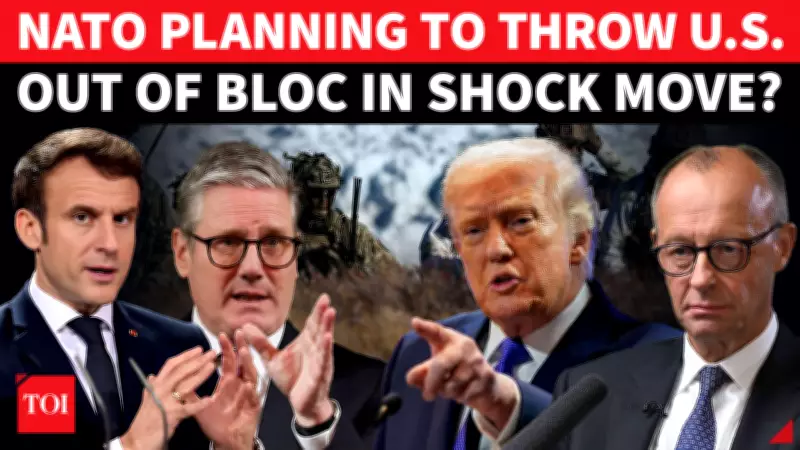
Europe Conducts War Drills Amid Fears of NATO Breakup Under Trump
European Union officials in Brussels are quietly preparing for a scenario that has long been avoided: a future where the North Atlantic Treaty Organization (NATO) can no longer rely on the United States for security guarantees. According to recent reports, high-level simulations are being planned to test how Europe would respond if a member state came under military attack.
Testing Article 42.7 of the EU Treaty
At the center of these unprecedented military exercises is Article 42.7 of the European Union treaty, which obligates member states to provide aid and assistance "by all means in their power" to any fellow EU country that becomes a victim of armed aggression. This clause represents Europe's own mutual defense commitment, separate from NATO's Article 5 collective defense provision.
The planned simulations reflect growing concern among European leaders about strained transatlantic ties and shifting U.S. foreign policy priorities. The exercises are designed to assess Europe's independent military capabilities and response mechanisms in a potential crisis scenario where American support might not be forthcoming.

Growing Concerns Over Transatlantic Relations
European security officials have expressed increasing anxiety about the future of the transatlantic alliance, particularly with the possibility of Donald Trump returning to the White House. Trump has previously questioned the value of NATO and suggested he might withdraw the United States from the alliance if member countries don't increase their defense spending.
The war drills represent a significant shift in European strategic thinking. For decades, European security has been fundamentally tied to American military protection through NATO. These exercises signal that European leaders are seriously contemplating a future where they must provide for their own defense without guaranteed U.S. support.
Strategic Implications and Regional Security
The planning of these simulations comes amid heightened global tensions and multiple regional conflicts. European defense analysts note that the exercises will likely test:
- Rapid deployment capabilities of European forces
- Coordination between EU member state militaries
- Logistical support systems for extended operations
- Intelligence sharing mechanisms among European nations
- Command and control structures for multinational operations
While European officials emphasize that these are precautionary measures, the very fact that such simulations are being planned represents a significant acknowledgment of changing geopolitical realities. The exercises are expected to involve senior military and political leaders from multiple EU countries, testing both military responses and diplomatic coordination during a simulated crisis.
European defense spending has increased in recent years, with many NATO members meeting or exceeding the alliance's target of 2% of GDP. However, questions remain about whether European militaries have the capability to respond effectively to major security threats without American logistical support, intelligence capabilities, and military assets.
The war drills planning represents Europe's most concrete step yet toward preparing for potential strategic autonomy in defense matters. As transatlantic relations face uncertainty, European leaders appear determined to ensure they have contingency plans for maintaining regional security regardless of America's future role in European defense architecture.

