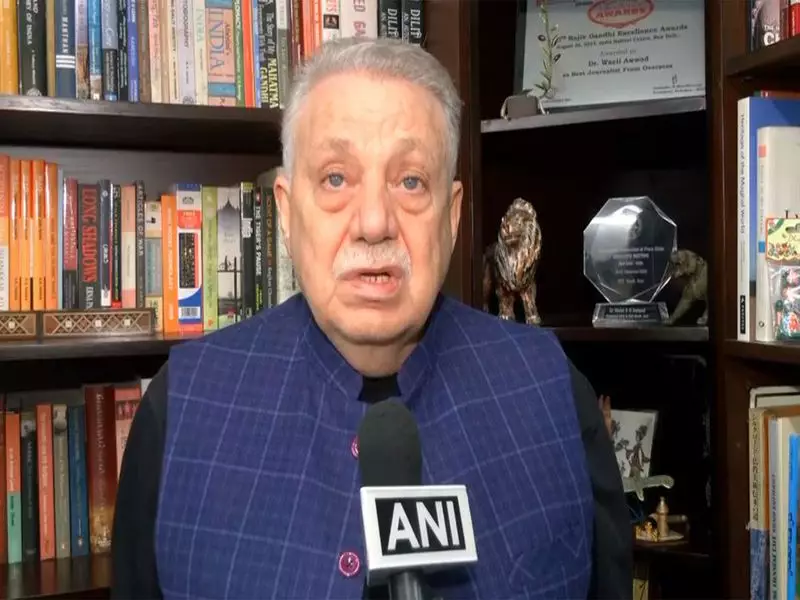
In a scathing critique of recent American foreign policy actions, a prominent foreign affairs expert has accused the United States of behaving like an "outlaw state." The comments were made in response to the US government's renewed push for the capture of Venezuelan President Nicolás Maduro and the intensification of economic sanctions against the South American nation.
Expert Condemns US Actions as a Breach of Global Norms
Waiel Awwad, a foreign policy analyst and former advisor, did not mince words in his assessment. He stated that the United States is operating outside the established framework of international law. "International law no longer exists for the United States," Awwad asserted, highlighting what he sees as a pattern of Washington disregarding global rules when they conflict with its political objectives.
The immediate context for this strong condemnation is the recent announcement by US officials regarding President Nicolás Maduro. The US has reactivated a $15 million bounty for information leading to Maduro's arrest. Furthermore, the Biden administration has decided not to renew a key license that had temporarily eased some oil and gas sanctions on Venezuela, a move expected to significantly tighten economic pressure on Caracas.

The Venezuela Case: Sanctions and Arrest Warrants
The US stance stems from long-held accusations against Maduro's government. Washington alleges serious human rights abuses, corruption, and the undermining of democratic institutions. The arrest warrant and bounty are linked to charges of narco-terrorism. However, critics like Awwad argue that these actions are politically motivated and violate the principle of state sovereignty.
Awwad pointedly questioned the legal and moral authority behind the US's unilateral measures. "Who gave the United States the right to issue an arrest warrant for a president of a sovereign state?" he asked. He contrasted the US's vigorous pursuit of Maduro with its perceived inaction in other global conflicts, suggesting a double standard in the application of justice and international law.
The reinstatement of stringent sanctions is a major blow to Venezuela's economy, which is heavily reliant on oil exports. The license, known as General License 44, had provided a six-month relief window. Its non-renewal forces foreign companies to wind down their operations with Venezuela's state-owned oil company, PDVSA, by May 31, 2024, potentially crippling a vital source of revenue for the country.
Broader Implications for Global Order and Diplomacy
Waiel Awwad's criticism extends beyond the specific case of Venezuela. He frames the US actions as part of a dangerous trend where powerful nations selectively enforce or ignore international law to suit their geopolitical interests. This behavior, he warns, erodes the very foundations of the global system and sets a precedent that weaker international norms.
The expert's remarks underscore a deepening rift in how international relations are conducted. The use of unilateral economic sanctions and extraterritorial arrest warrants against sitting heads of state remains a highly contentious tool in foreign policy. For nations already critical of US hegemony, this case serves as a potent example of what they describe as coercive and illegal interventionism.
The situation leaves Venezuela at a critical juncture, facing renewed economic isolation. It also places the United States' commitment to a rules-based international order under intense scrutiny from observers and nations advocating for a more multipolar world where sovereignty is rigorously respected.