

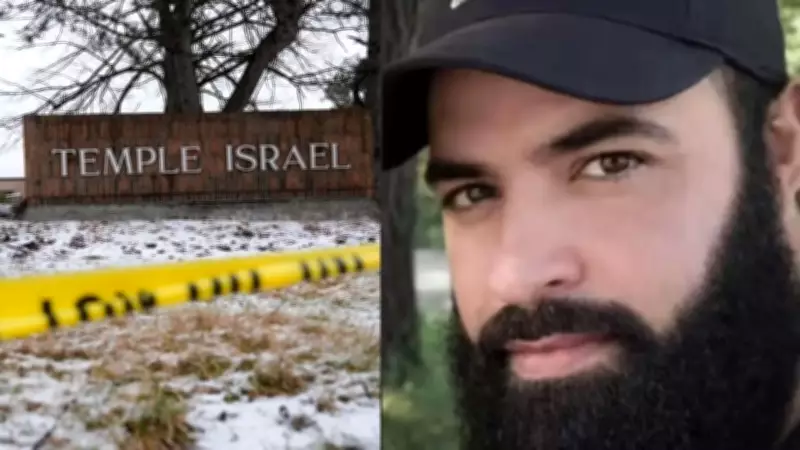
FBI Confirms Detroit Synagogue Attack Was Hezbollah-Inspired Terrorist Act
The Federal Bureau of Investigation (FBI) announced on Monday that a man who crashed his pickup truck into a Detroit-area synagogue earlier this month carried out an attack inspired by the Iran-backed militant group Hezbollah. This declaration came following a thorough investigation into the violent incident at Temple Israel, which authorities now classify as a deliberate act of terrorism targeting the Jewish community.
Attacker's Motivation and Background
Ayman Mohamad Ghazali, a 41-year-old resident of Dearborn Heights, Michigan, was identified as the perpetrator. According to Jennifer Runyan, head of the FBI's Detroit field office, Ghazali created a video before the attack in which he explicitly stated his intention to "kill as many of them as I possibly can." The FBI assessment concluded that this was a Hezbollah-inspired act of terrorism purposely targeting both the Jewish community and Michigan's largest Jewish temple.
"The evidence shows the attacker was motivated and inspired by Hezbollah's militant ideology," Runyan emphasized during the announcement. "We assess this attack to be a Hezbollah-inspired act of terrorism purposely targeting the Jewish community and the largest Jewish temple in Michigan."

Ghazali was a naturalized U.S. citizen originally from Mashghara in Lebanon's Beqaa Valley. Investigators discovered significant family connections to Hezbollah, including a brother, Ibrahim Ghazali, who served as a commander within the militant organization. Additionally, Israeli military officials confirmed that two of Ghazali's adult brothers, along with his niece and nephew, were killed in Israeli airstrikes in Lebanon prior to the synagogue attack.
Detailed Account of the Temple Israel Attack
On March 12, Ghazali executed a carefully planned assault on Temple Israel in West Bloomfield. He sat in the synagogue parking lot for several hours before accelerating his Ford F-150 pickup truck through closed doors into a hallway that housed an early childhood education area. During this initial impact, the vehicle struck a security guard stationed at the location.
The truck was reportedly stocked with commercial-grade fireworks and multiple jugs of gasoline, indicating preparations for a potentially larger-scale attack. During an exchange of gunfire with security personnel, the vehicle caught fire. Ghazali ultimately fatally shot himself during the confrontation, ending the immediate threat.
First responders acted swiftly to clear the building, ensuring the safety of approximately 150 children and staff members who were present at the time. Remarkably, none of these individuals sustained injuries during the attack.
Investigation Findings and Security Response
Following the incident, authorities conducted a comprehensive investigation that included searching Ghazali's residence and examining his digital activity. Investigators discovered that he had shared images of children killed in Israeli airstrikes prior to carrying out the synagogue attack, further supporting the connection to Hezbollah's militant ideology and anti-Israel sentiment.
Temple Israel, which is part of Reform Judaism—the largest branch in North America—represents the second-largest congregation in the denomination with over 12,000 members. Founded in Detroit in 1941 and relocated to West Bloomfield in the 1980s, the synagogue emphasizes progressive values including social justice and gender equality.
In response to this terrorist attack, security measures were significantly increased at Jewish institutions across Michigan to prevent further incidents and protect vulnerable communities from similar threats.






