

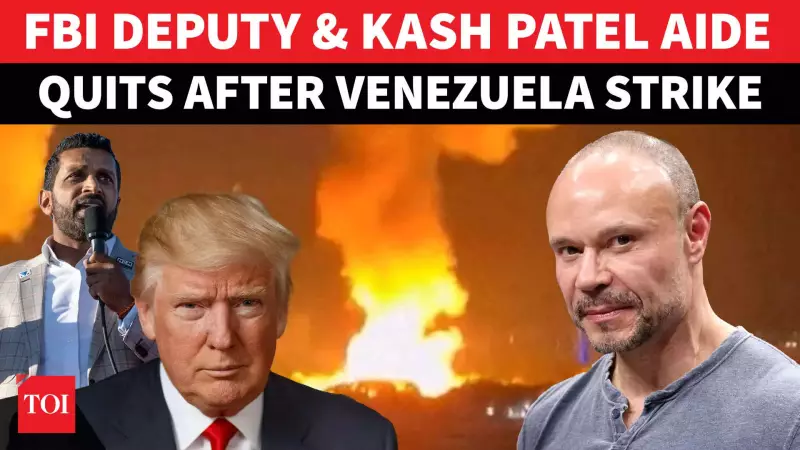
Washington witnessed a remarkable alignment of events on January 5, 2026, where a major geopolitical action intersected with a significant leadership change in US law enforcement. On the very day the United States military executed a secret mission to apprehend Venezuelan President Nicolás Maduro, FBI Deputy Director Dan Bongino concluded his tenure at the bureau.
A High-Stakes Final Day for FBI's Bongino
Dan Bongino, who had publicly announced his planned departure back in December, marked his exit with an understated comment about it being a "busy last day on the job." The scale of that busyness, however, was extraordinary. According to federal sources, the FBI was not a bystander but a key player in the high-risk operation targeting Maduro. The bureau's elite Hostage Rescue Team (HRT) was deployed on the ground, taking charge of the captured leader's secure transport out of Venezuela.
The Covert Operation and Its Aftermath
The mission, a bold covert action by the US military, successfully resulted in the capture of Venezuelan President Nicolás Maduro. The operation's success was immediately followed by dramatic visuals, including Maduro being escorted in handcuffs by FBI agents and later giving a thumbs-up at a DEA office upon landing in the US. This event has triggered a complex mix of reactions, from celebrations by some Venezuelan expatriates to protests and sharp international condemnation, framing it as a pivotal moment in US foreign policy and global power dynamics.

Viral Post Adds to the Political Firestorm
Amidst this geopolitical upheaval, a social media post from an aide to former official Kash Patel regarding Venezuela went viral, adding fuel to the intense online discourse surrounding the operation. The convergence of Bongino's career transition, the successful capture, and the viral political commentary underscores a dramatic period where US law enforcement, military strategy, and global diplomacy collided.
As Bongino steps back into civilian life, the repercussions of January 5 continue to unfold. The event raises immediate questions about Venezuela's political future, with reports suggesting Delcy Rodríguez now leading the nation. It also sets the stage for potential escalations in international relations, especially with countries like China, which has significant financial interests in Venezuela.






