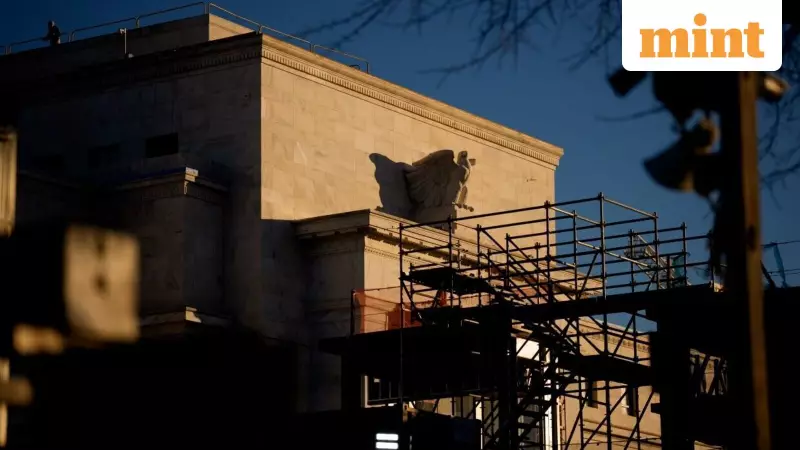
In a dramatic escalation of tensions between the US central bank and the executive branch, Federal Reserve Chair Jerome Powell has publicly disclosed receiving grand jury subpoenas from the Justice Department, a move that carries the threat of a criminal indictment. Powell, in a strongly-worded video statement released on Sunday night, labelled the investigation a "pretext" orchestrated as part of President Donald Trump's ongoing campaign to pressure the independent Fed into lowering interest rates.
Subpoenas Target Testimony on Building Renovation
The legal action, confirmed by the Fed on Friday, January 12, 2026, centres on testimony provided by Powell last summer. The subject of that testimony was the central bank's building renovation project. While the specifics of the alleged discrepancies are not detailed in the public statement, the issuance of grand jury subpoenas indicates a serious step by federal prosecutors, moving beyond a preliminary inquiry.
Powell's decision to pre-emptively address the matter in a public video underscores the gravity of the situation. He framed the issue not as a legitimate legal proceeding but as a direct assault on the Fed's operational independence. "This is about whether the Fed will be able to continue to set interest rates based on evidence and economic conditions—or whether instead monetary policy will be directed by political pressure or intimidation," Powell stated unequivocally.

A Battle for Central Bank Independence
This development marks a new low in the fraught relationship between the Trump administration and the Federal Reserve. For years, former and now-returning President Trump has frequently and openly criticised the Fed's interest rate decisions, calling for deeper cuts to stimulate the economy. However, the use of the Justice Department to issue criminal subpoenas against the sitting Fed chair represents an unprecedented tactic.
Financial experts and observers of central banking are viewing this as a critical stress test for the institution's autonomy. The Federal Reserve is designed to be insulated from short-term political cycles to make decisions aimed at long-term price stability and maximum employment. A successful campaign to influence its decisions through legal coercion could have profound implications not just for the US economy, but for global financial markets that rely on the Fed's credibility.
What Happens Next?
The immediate next steps involve the Fed and Powell's legal team responding to the Justice Department's subpoenas. The content of Powell's summer testimony and the details of the renovation project will likely come under intense scrutiny. Meanwhile, the political fallout is already underway, with Powell's public accusation setting the stage for a fierce constitutional and institutional debate about the separation of monetary policy from executive power.
For investors and market participants in India and worldwide, this introduces a new layer of geopolitical risk into economic forecasting. The uncertainty surrounding the leadership and freedom of the world's most influential central bank could lead to increased volatility. The core question, as posed by Powell himself, remains unanswered: can the Federal Reserve maintain its evidence-based approach, or will it bend to external pressure?