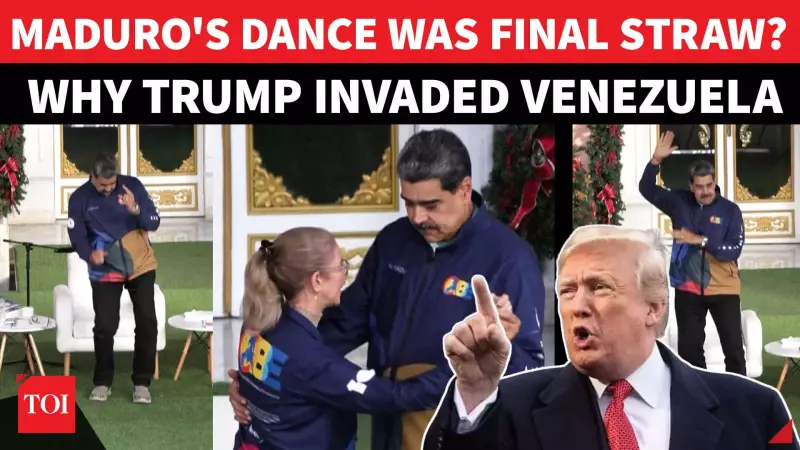
A viral dance video by Venezuelan President Nicolás Maduro, intended as a message of peace, has reportedly triggered a severe geopolitical retaliation from the United States, culminating in his dramatic capture and extradition to New York. The sequence of events, which began in early January 2026, marks one of the most sudden and aggressive escalations in recent hemispheric history.
From Defiant Dance to Perceived Mockery
The incident's origins trace back to a televised moment in Caracas shortly after a U.S. military strike on a Venezuelan dock. President Maduro was filmed publicly dancing to a remix of a song whose lyrics repeatedly stated "No war, yes peace." While likely aimed at a domestic audience to project calm, the act was interpreted very differently in Washington.
According to sources referenced by The New York Times, U.S. President Donald Trump and his senior advisers viewed the dance as a direct and mocking act of defiance. This perception came at a time of already heightened military tensions in the Caribbean region, turning a symbolic gesture into what was seen as a provocation.

The Lightning Covert Operation
The American response was swift and decisive. Within days of the dance video circulating, the United States launched a covert overnight mission. On January 5, 2026, the operation unfolded with striking speed. The Venezuelan capital, Caracas, experienced a blackout, and key military installations were targeted.
In the heart of the chaos, a raid team successfully detained President Nicolás Maduro and his wife, Cilia Flores. The operation was described as a lightning action, overwhelming local security. Maduro was swiftly flown out of the country to face justice in the United States.
Charges, Custody, and a New Year's Greeting
Now in U.S. custody, Maduro faces a series of serious charges in a New York court. The indictment includes allegations of narco-terrorism conspiracy, weapons offences, and plots to import cocaine. His arrest represents the highest-profile application of U.S. drug laws against a sitting head of state.
In a moment of surreal irony following his capture, Maduro reportedly wished U.S. Drug Enforcement Administration agents a "Happy New Year" and gave a thumbs-up gesture. He was subsequently transferred to the high-security Metropolitan Detention Center in Brooklyn to await legal proceedings.
Geopolitical Fallout and a Power Vacuum
In the aftermath of the operation, President Trump declared that the United States would take charge of Venezuela during Maduro's absence. The announcement heavily emphasized securing and managing the country's vast oil infrastructure, a key strategic and economic prize.
The event has redrawn the political map of Venezuela overnight and sent shockwaves through international diplomacy. It underscores how a single act of political symbolism, amplified by digital media, can collide with hard power realities with unpredictable and far-reaching consequences. The story arc from a dance floor in Caracas to a detention cell in Brooklyn encapsulates a new and volatile chapter in US-Venezuela relations.