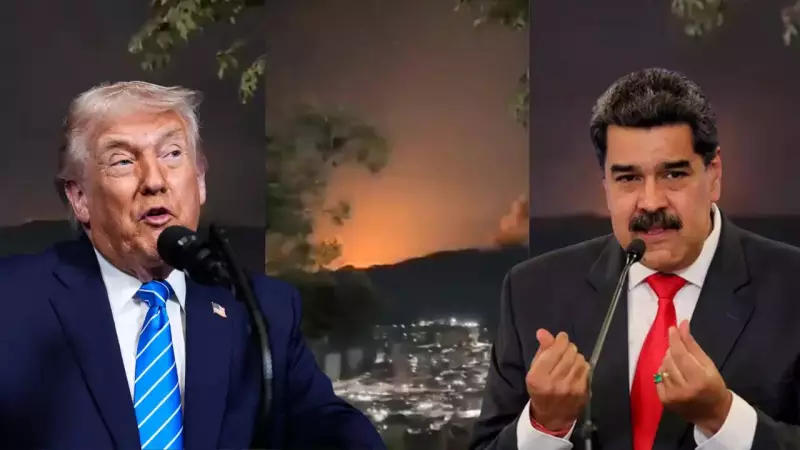
In a high-risk, pre-dawn military operation described by US officials as "flawless," Venezuelan President Nicolás Maduro was captured and extracted from his country to face federal drug trafficking charges in the United States. The meticulously planned mission, codenamed 'Operation Absolute Resolve,' culminated on Saturday after months of clandestine intelligence gathering by the CIA and detailed rehearsals by elite special forces.
Covert CIA Intelligence Paved the Way
According to officials familiar with the mission, the groundwork began in August when a covert CIA team entered Venezuela. With the US embassy in Caracas closed, the officers operated without diplomatic cover, remaining undetected for months. Their target was President Maduro, whom the Trump administration had publicly designated a narco-terrorist.
The agency built a detailed picture of Maduro's life by combining intelligence from a human source close to the leader with surveillance from stealth drones operating over the capital. General Dan Caine, chairman of the Joint Chiefs of Staff, stated this intelligence allowed the US to map Maduro's routines with extreme precision, including his daily movements, diet, and even the pets he kept. This information became the bedrock for planning the eventual military raid.

Military Rehearsals and Final Go-Ahead
As intelligence flowed in, Delta Force commandos began rehearsing the extraction at a full-scale replica of Maduro's compound built in Kentucky. The drills focused on rapid entry, breaching reinforced doors, and clearing the structure within minutes.
Planning faced significant hurdles. Maduro frequently rotated between six to eight locations, often deciding his whereabouts late in the evening, complicating last-minute targeting. The US also aimed to minimise civilian casualties, narrowing the operational window further.
President Donald Trump authorised the military to proceed as early as December 25, leaving the final timing to Pentagon planners who saw the holiday period—when many Venezuelan officials were on leave—as favourable. After a four-day delay due to unseasonably poor weather, Trump issued the final go-ahead at 10.46 pm Friday (local time) from his Mar-a-Lago estate.
The Raid and Extraction Unfold
The operation began with a cyberattack that cut power across large parts of Caracas, allowing US aircraft to approach with reduced detection. Early Saturday, US warplanes struck Venezuelan radar and air defence installations. A senior Venezuelan official said these strikes killed at least 40 people, including civilians and military personnel.
Despite suppressed air defences, US helicopters came under fire as they approached Maduro's compound around 2.01 am (local time). One helicopter was hit, injuring about half a dozen US soldiers. Delta Force operators, flown in by the Army's 160th Special Operations Aviation Regiment, breached the compound with explosives and reached Maduro within minutes.
Within five minutes of entering the building, Maduro was in custody. He and his wife were swiftly flown by helicopter to the USS Iwo Jima in the Caribbean by 4.29 am Caracas time, then transferred to Guantánamo Bay before being flown to a military airport near New York.
Aftermath and Broader Implications
Speaking at a press conference, President Trump declared the mission a success and warned that the US was prepared to carry out further strikes if necessary, targeting other Venezuelan leaders. He also stated that the US would be running Venezuela until a "proper, safe transition takes place," specifically mentioning the nation's vast oil reserves, which he said would now be tapped by the US.
While US officials hailed the mission's tactical success, it has ignited intense debate over civilian casualties, the operation's legality, and the long-term role of Washington in Venezuela's future. The raid represents a dramatic escalation in the Trump administration's campaign against the Maduro regime.