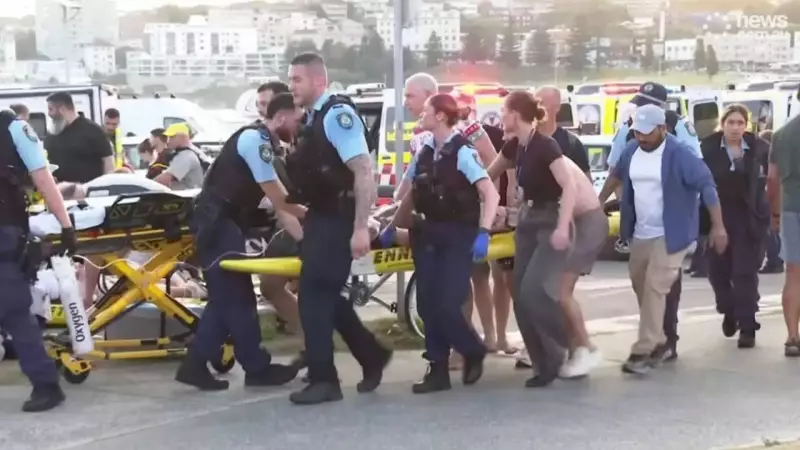
On a serene evening meant for celebration, Sydney's iconic Bondi Beach transformed into a scene of terror. For Rahemath Pasha, a 37-year-old Uber driver from Hyderabad, the sounds he initially mistook for fireworks on December 14, 2025, were, in fact, the beginning of Australia's worst terrorist attack in decades.
From Celebration to Carnage: The Attack Unfolds
Rahemath was waiting for his ride about 400 metres away when a radicalised father-son duo opened fire on a Hanukkah celebration attended by nearly a thousand Jewish people. Mass shootings are exceptionally rare in Australia, a nation known for its strict gun laws reformed after the 1996 Port Arthur massacre. The bursts of gunfire shattered the beachside calm, replaced by screams and panic.
"I saw a man walking forward, firing," Rahemath recalled. People began running and dropping to the ground. While most fled, Rahemath found himself frozen, not by bravery, he insists, but by the sight of those who could not escape. His eyes locked on an elderly woman, close to 90 years old, waving desperately for help. A bullet had passed through one of her legs into the other, leaving her immobile.

A Human Response: "Leaving Did Not Feel Like an Option"
"I was terrified. It felt like a movie scene. Blood, bodies, running people. Except people were actually dying," Rahemath said. Despite having no medical training, he moved towards the danger. His instinct was simple: help. He reached the elderly woman, held her hand, and whispered reassurances for 45 minutes as lifeguards used surfboards as makeshift stretchers.
"She told me she was only sitting on the bench singing songs…she kept saying that she had done nothing wrong," he remembered. When she was finally taken into an ambulance, she smiled and blessed him. "It felt like a mother’s embrace," he said, adding he still hopes she survived.
Over the next several hours, Rahemath assisted more than a dozen people. He guided the injured, sat with those in shock, and helped emergency responders. In one heartbreaking moment, he held the hand of a speechless middle-aged man who lost consciousness and died in his arms. "He just went quiet, right in my arms," Rahemath recalled.
Faith, Family, and the Aftermath
Authorities later described the attack as an act of terrorism motivated by Islamic State ideology. Fifteen people were killed, including a child, and dozens were injured. As Sydney recovers with vigils and debates on gun reform, Rahemath grapples with the trauma.
His parents in Hyderabad saw his images on TV before hearing from him. "They were very scared. I was trying to calm them while I myself was still shaking," he said. A Muslim, Rahemath paused when asked if his faith influenced his actions. "I believe in humanity first. Caste, creed, religion. None of that matters at that moment. Even Islam teaches this. If you save one life, you save all of humankind."
He rejects having his actions framed as symbolic. "This should not be about breaking stereotypes. This is just what a human being should do."
Three days later, on December 17, he returned to Bondi Beach for a memorial, placing chrysanthemums among hundreds of others. Sleep has been difficult since. The images and screams return uninvited. Yet, when asked if he would run if faced with the same horror again, his answer is firm.
"If someone needs help and you are there, you help." Now, Rahemath returns to his Uber shifts and his hunt for a chef job, driven by the dream of a better future for his two young children back in India.