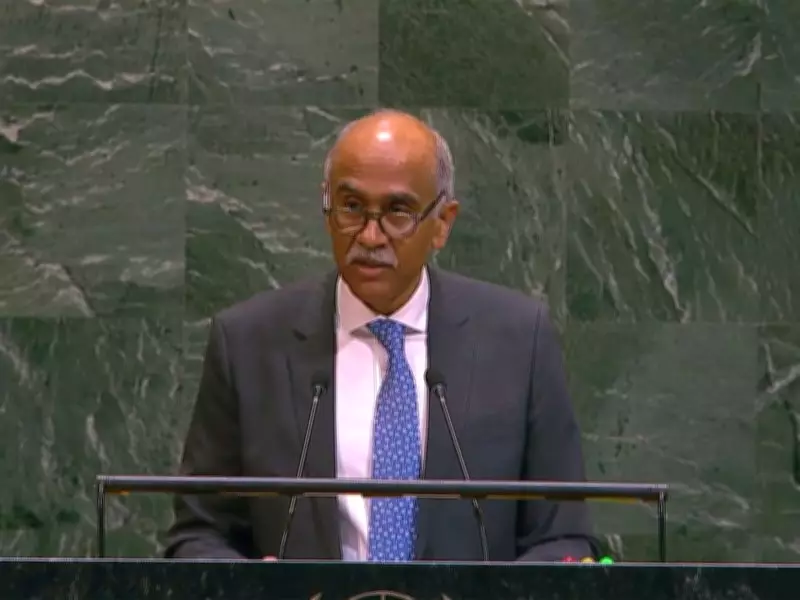
India's Permanent Representative to the United Nations, Harish Parvathaneni, reaffirmed India's commitment to ending AIDS as a public health threat by 2030 during the High-Level Meeting on HIV/AIDS at the United Nations on Monday.
India's Commitment to Global HIV Goals
Delivering India's national statement on the 2026 Political Declaration on HIV/AIDS, Parvathaneni said India supported the global commitment to ending AIDS. He emphasized that the global HIV response stands at a critical juncture as the 2030 deadline approaches.
"While remarkable progress has been achieved over the past two decades, persistent inequalities, financing constraints, and emerging global challenges continue to threaten these gains," he said. "We therefore support the Declaration's renewed commitment to ending AIDS as a public health threat by 2030 and sustaining progress beyond."

National AIDS Control Programme
Highlighting India's domestic efforts, Parvathaneni stated that India remains firmly committed through the National AIDS and STD Control Programme, which is guided by evidence-based planning, community engagement, and integrated service delivery.
He noted that sustained domestic investments have enabled India to reduce new HIV infections and AIDS-related deaths while expanding access to prevention, testing, treatment, care, and support services.
Focus on Sustainable Financing and Country Ownership
Parvathaneni welcomed the declaration's emphasis on country ownership and sustainable financing. "For long-term sustainability, national responses must be led by countries, must be aligned with local epidemiology, and supported by predictable financing and strengthened health systems," he said.
Triple Elimination Strategy for Vertical Transmission
The Indian envoy highlighted the country's Triple Elimination Strategy for HIV, Syphilis, and Hepatitis B among pregnant women. "India attaches high importance to eliminating vertical transmission of HIV and syphilis. We have initiated a Triple Elimination Strategy based on universal antenatal screening, timely linkage to treatment, and follow-up of exposed infants," he said.
He welcomed the declaration's commitment to ending paediatric AIDS and accelerating the elimination of vertical transmission, while also backing integrated responses to HIV, tuberculosis, viral hepatitis, and other co-infections.
Equitable Access to Medicines and Technologies
Underscoring the need for affordable healthcare access, Parvathaneni said, "India further underscores the importance of equitable access to affordable medicines, diagnostics and emerging technologies. The use of the flexibilities available under the WTO TRIPS Agreement remains critical for ensuring access to life-saving health products, particularly for developing countries."
Role of Communities and Civil Society
He acknowledged the role of communities and civil society organisations in strengthening HIV responses and called for meaningful stakeholder engagement in line with national contexts and priorities.
India's Readiness to Collaborate
Parvathaneni reiterated India's readiness to work with international partners to achieve the 2030 goal. "India remains committed to working with Member States, UNAIDS, and all partners to accelerate progress towards ending AIDS as a public health threat by 2030, while ensuring that the response remains people-centred, sustainable, equitable, and nationally owned," he said.