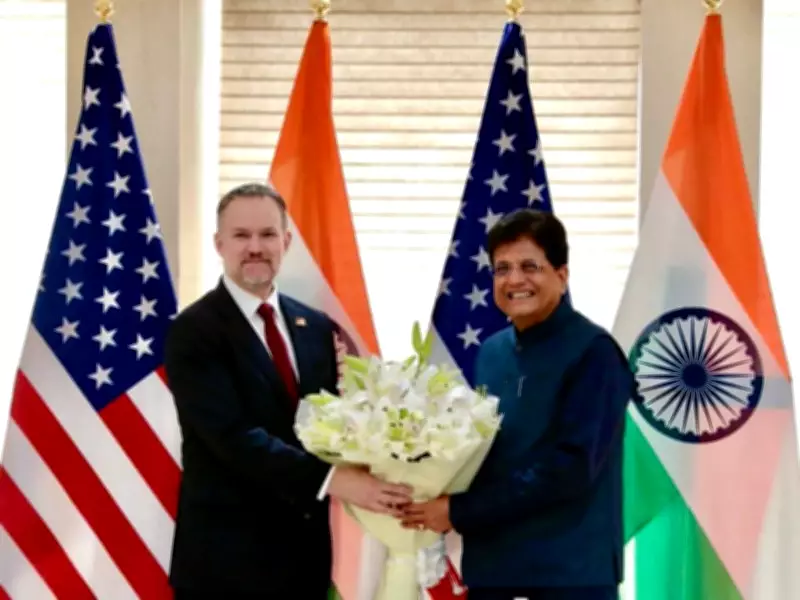
Progress in India-US Trade Negotiations
India and the United States have achieved substantial progress in trade negotiations following a two-day meeting between US Trade Representative Jamieson Greer and Union Commerce Minister Piyush Goyal in New Delhi on June 23-24. However, experts from the Asia Society Policy Institute (ASPI) caution that significant hurdles remain before a final agreement can be reached.
Wendy Cutler: Trust Deficit Complicates Deal
Wendy Cutler, Senior Vice President at ASPI, noted that despite the recent progress, concluding a trade deal with India has proven elusive. "Each side has its own priorities and redlines which continue to prevent a successful conclusion," she said. She added that developments over the past year have created a serious trust deficit on India's part, making finalization more complicated.
Cutler highlighted that India seeks greater clarity on tariff arrangements before finalizing any agreement. "India very much wants a preferential tariff edge over its competitors, so it is in no hurry to conclude until there is further clarity on tariff rates and product exclusions," she explained. India is also seeking assurances from Washington against further tariff hikes, which Cutler described as likely a "bridge too far" for the Trump administration.

While welcoming reports of progress, Cutler cautioned that the final stage of negotiations is often the most difficult. "Being very close on concluding a trade deal is welcome news, but it is typically the final remaining matters that are the toughest to resolve, meaning expect further rounds between negotiators," she said.
Farwa Aamer: Geopolitical Divergences Impact Talks
Farwa Aamer, Director of South Asia Initiatives at ASPI, observed that sustained engagement from both governments points to the possibility of an agreement, though challenges remain. "The sustained effort from both sides shows promise toward the deal, but not without a fair share of speed bumps and lingering uncertainty," she said.
Aamer noted that broader geopolitical factors have influenced the negotiations. "The wider geopolitical divergences between New Delhi and Washington have also impacted the way at least India has been coming to the negotiating table, cooperative but more assertive," she said. She added that domestic pressure on Indian leadership to secure a balanced and fair deal is also a factor.
Potential Interim Agreement
Aamer suggested that an interim agreement could provide a boost to the broader bilateral relationship. "If the talks do come to fruition and an interim deal is reached within the anticipated timeframe, it would certainly help the otherwise strained US-India ties and lend some momentum to other areas of cooperation," she said. Both countries would benefit from a comprehensive deal, she added.
She also highlighted India's efforts to diversify its trade partnerships. "It is important to note how India is proactively engaging other trade partners in tandem. US trade policy has fast-tracked the hedging behaviour, and India recognises the need to expand the trade portfolio, aiming to reduce vulnerabilities where possible," Aamer concluded.