

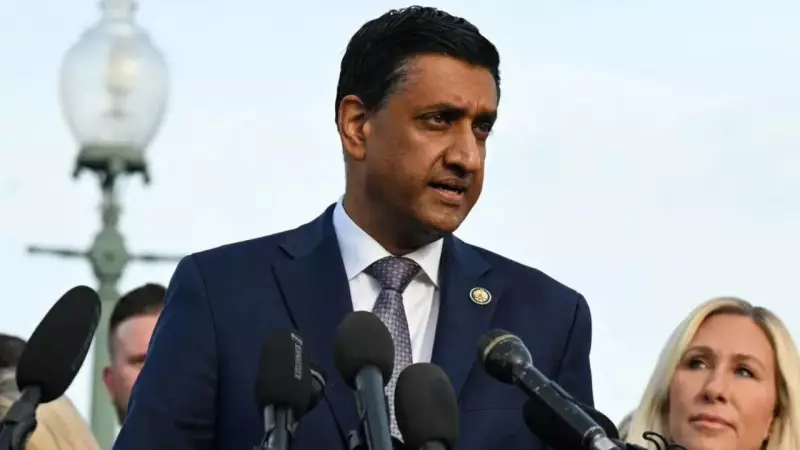
Indian-American Congressman Ro Khanna has delivered a sharp rebuke to MAGA commentator and author Jesse Kelly over his controversial praise for colonization. The fiery exchange unfolded on social media platform X, sparking a debate on historical interpretation and the legacy of imperialism.
A Controversial Defense of Colonialism
The dispute began when Jesse Kelly posted a claim that colonization represented "one of the greatest things" to occur in nations he described as backward. Kelly attributed contemporary criticism of Western colonial history to what he termed "communist education." This perspective, which glorifies the era of imperial expansion, ignited immediate backlash from various quarters.
Ro Khanna, a Democratic lawmaker representing California, was quick to respond. He stated that Kelly had the historical analysis "exactly backwards." Khanna anchored his counter-argument in the powerful legacy of Mahatma Gandhi, India's preeminent freedom fighter and apostle of non-violence.

Khanna's Personal and Historical Rebuttal
In his response, Khanna highlighted how Gandhi's philosophy of peaceful resistance went on to inspire American civil rights icon Martin Luther King Jr. He noted that MLK's work for the dignity of Black and marginalized communities stands as one of the most significant political influences in U.S. history. This connection underscored a flow of ideas from the colonized to the colonizer, challenging Kelly's narrative.
The congressman powerfully linked this history to his own family's story. He expressed pride in his maternal grandfather, Amarnath Vidyalankar, who was actively involved in India's independence movement. Vidyalankar was imprisoned for his participation in the struggle against British rule, working alongside noted revolutionaries like Lala Lajpat Rai. Khanna used this personal history to assert that colonization was a cruel and damaging force, not a benevolent one.
Ro Khanna, born in Philadelphia during the U.S. bicentennial, is the son of immigrants from Punjab. His father is an IIT and University of Michigan-educated chemical engineer, and his mother is a former schoolteacher.
Broader Political Context: The Venezuela Operation
Khanna's comments come amid a tense international climate, following a recent major military action. The U.S. military executed an invasion of Venezuela, leading to the capture of President Nicolás Maduro and his wife, Cilia Flores, from their residences. The mission, codenamed "Operation Absolute Resolve," involved large-scale strikes across Caracas and other regions, targeting military facilities and infrastructure.
Venezuelan officials decried the attack as an act of "military aggression," reporting dozens of casualties as explosions and aircraft rattled the capital. Democratic leaders in the U.S. have criticized the move as unconstitutional, accusing the Trump administration of initiating an unnecessary war.
The juxtaposition of these events—a debate on colonial history and a contemporary military intervention—highlights ongoing global tensions regarding sovereignty, historical justice, and the use of power. Khanna's stance connects a personal lineage of anti-colonial resistance to a modern political perspective that questions imperialistic actions, both past and present.






