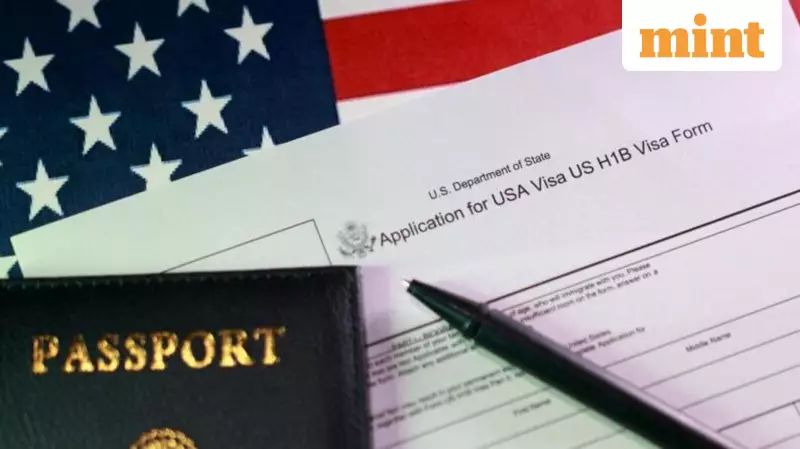
A sudden and sweeping change in US visa processing has thrown the plans of thousands of Indian technology professionals into disarray. In a move that has created widespread uncertainty, the United States has abruptly postponed a large number of pre-scheduled H-1B visa interviews, with some delays stretching as far as October 2026.
Mass Cancellations and Logistical Nightmare
According to reports from Hindustan Times and PTI, the US Embassy in India has initiated what is being described as a "mass cancellation" of visa appointments. The primary targets are applicants with interviews scheduled after December 15. The embassy has issued an advisory explicitly warning applicants not to appear at consular offices on their original dates.
The timing could not be worse. Hundreds, possibly thousands, of high-skilled workers had their appointments cancelled between December 15 and 26. This period is popular among H-1B holders as it coincides with the Christmas holiday season, a time many travel to India. Consequently, numerous professionals who had already flown home specifically for their visa stamping are now legally stranded. Without a valid visa in their passport, they cannot return to their jobs and homes in the United States.

Root Cause: New Social Media Vetting Policy
The drastic delays are a direct result of the Trump administration's implementation of stringent new background and social media screening norms. As per a Washington Post report citing official emails, the US State Department stated interviews were being delayed to ensure thorough vetting under the new policy "to ensure that no applicants … pose a threat to US national security or public safety."
Effective December 15, the State Department has expanded its review of online presence to include all H-1B applicants and their dependents on H-4 visas. While students and exchange visitors were already subject to this, the requirement now covers this key workforce. To facilitate the vetting, applicants are instructed to set the privacy settings on all their social media profiles to 'public'.
Broader Impact on Professionals and US Companies
The repercussions of these delays are severe and multi-layered. For the individuals affected, prolonged, unexpected absences from work could lead to job terminations as their roles in the US remain vacant. This uncertainty follows a recent proclamation by the administration that raised H-1B fees significantly.
The impact ripples out to the American tech industry itself. US companies, which depend on Indian talent for roughly 71% of all approved H-1B applications, now face an acute talent shortage. The H-1B visa program is a critical pipeline for bringing foreign workers with specialized skills to the sector.
Immigration experts have voiced strong criticism. Houston-based attorney Emily Neumann highlighted the chaos in a social media post, stating, "Visa stamping feels like a maze of pitfalls right now... There is no predictability in this process, and it is creating real challenges for businesses and employees who need to travel."
The situation remains fluid, with the exact number of impacted individuals unconfirmed. However, it is clear that the policy shift has created a perfect storm of anxiety for the Indian diaspora and operational headaches for the global tech industry that relies on their expertise.