Iran's Retaliatory Strikes Cripple U.S. Gulf Bases, Exposing Strategic Vulnerabilities
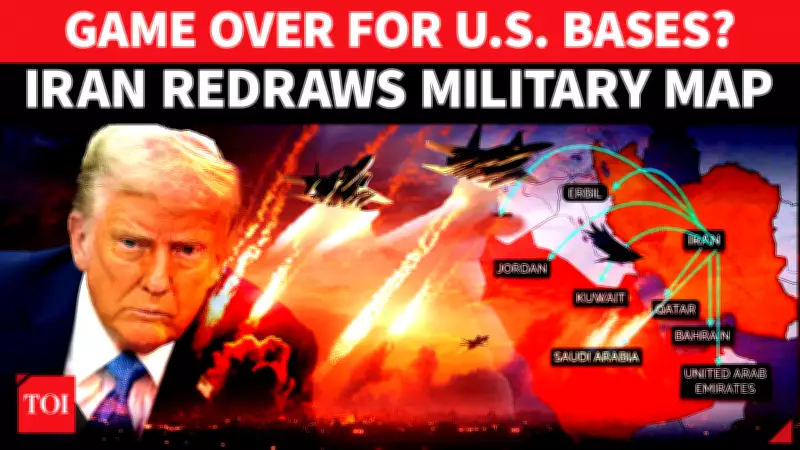
Iran's recent retaliatory strikes have delivered a substantial and significant blow to the extensive U.S. military infrastructure strategically positioned across the Gulf region. According to multiple media reports and expert analyses, at least a dozen American bases have sustained severe damage, with some facilities becoming so compromised that they are no longer fully operational or functional. This development has forced American military personnel and support staff to urgently relocate to temporary alternative sites, including hotels and commercial office spaces, highlighting the immediate operational disruption.
Undermining the Foundation of U.S. Regional Power
Security analysts and regional experts are now issuing stark warnings, arguing that these military installations—once considered central and indispensable to Washington's regional dominance and force projection in the Middle East—may now paradoxically pose more vulnerabilities than strategic advantages. The precision and scale of the strikes have effectively undermined the physical foundation of U.S. military power in the volatile region within a matter of weeks, challenging long-held assumptions about American security guarantees.
With 19 known U.S. military sites spread across key allied Gulf nations such as Qatar, Bahrain, the United Arab Emirates, and Kuwait, the scale of the disruption is both significant and far-reaching. This network was designed to act as a protective shield and a rapid-response mechanism for U.S. interests and allies. However, the recent attacks have exposed critical weaknesses in this defensive posture, raising serious questions about the sustainability and resilience of forward-deployed forces in an era of advanced missile and drone capabilities.

Strategic Repercussions and Regional Implications
The degradation of these bases forces a urgent strategic reassessment for Pentagon planners and U.S. policymakers. The concept of a permanent, invulnerable forward presence is being severely tested. Furthermore, Gulf allies who host these facilities are now confronted with heightened security risks and potential political fallout, as their territories become focal points in the escalating U.S.-Iran confrontation.
Military historians note that while the U.S. has faced attacks on isolated outposts before, the coordinated targeting of a dozen major bases across multiple countries represents an unprecedented challenge to its military footprint in the Gulf. The need for rapid hardening of defenses, investment in missile defense systems, and potentially a reconsideration of basing strategies has become an immediate priority. The incident underscores a shifting balance of power, where regional actors like Iran can impose tangible costs on superpower military assets, altering the calculus of deterrence and diplomacy in the Middle East.