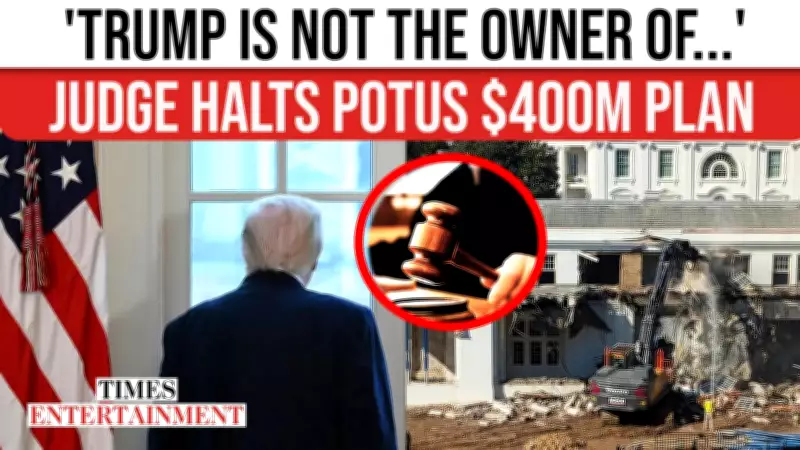
Federal Judge Halts Trump's White House Ballroom Project Over Legal Concerns
A US federal judge has issued a decisive ruling to block former President Donald Trump's ambitious $400 million proposal to construct a new ballroom at the White House. The project, which has been a subject of intense scrutiny, was halted due to the absence of necessary congressional approval, sparking a significant legal and constitutional debate.
Judge Leon's Ruling on Presidential Authority
In a strongly worded decision, US District Judge Richard Leon emphasized that the president serves as a steward, not the owner, of the White House. This distinction raises profound legal questions about the limits of executive power and the proper procedures for undertaking major renovations on federal property. The ruling underscores the judiciary's role in checking presidential actions that may overstep constitutional boundaries.
White House Appeals and Funding Dispute
The White House has promptly filed an appeal against the judge's decision, arguing that the ballroom project would be entirely privately funded. However, critics and legal experts have challenged this assertion, questioning whether private financing can legally be used for such extensive modifications to a government-owned building. This controversy has ignited a broader discussion about the ethics and legality of using private funds for public infrastructure projects.

Public and Online Reactions
The court's decision has fueled a heated online debate, with opinions sharply divided on the issues of legality, constitutional limits, and presidential powers. Supporters of the project argue for executive flexibility, while opponents stress the importance of adhering to established legal frameworks and congressional oversight. This case highlights the ongoing tensions between executive authority and democratic checks and balances in the United States.
As the legal battle continues, the outcome of this appeal could set a significant precedent for future presidential initiatives involving federal property and private funding. The controversy serves as a reminder of the complex interplay between law, politics, and public opinion in shaping governance.