

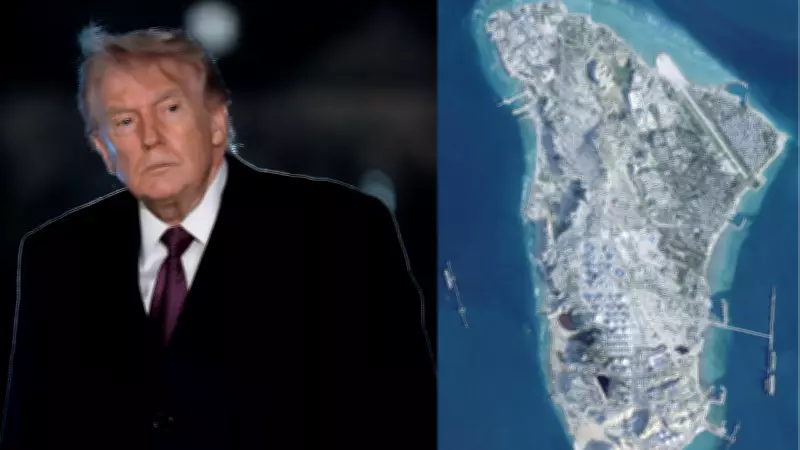
Kharg Island: The Tiny Persian Gulf Rock at the Heart of US-Iran Tensions
A modest rocky island in the Persian Gulf has unexpectedly emerged as a critical focal point in the rapidly escalating geopolitical standoff between the United States and Iran. Kharg Island, situated merely 15 nautical miles (approximately 24 kilometers) from Iran's southern coastline, may appear insignificant in size, yet it stands as one of the most strategically vital components of the nation's economic and energy infrastructure.
Why Kharg Island Matters Immensely
Despite its unassuming geography, Kharg Island serves as the indispensable core of Iran's oil export system. An astonishing 90% of Iran's crude oil exports transit through the island's massive oil terminal. Intricate pipeline networks transport crude oil from mainland Iran directly to Kharg, where it is systematically loaded onto colossal tankers.
The island's unique coastal positioning near deep waters in the northern Gulf permits Very Large Crude Carriers (VLCCs) to dock at its extensive jetties, loading tens of millions of gallons of oil. These mammoth vessels subsequently navigate southward through the Gulf, passing the crucial maritime chokepoint of the Strait of Hormuz before predominantly heading to Asian markets, with China being the largest purchaser of Iranian oil.

Due to this pivotal role, analysts frequently characterize Kharg Island as Iran's economic lifeline. The substantial oil revenue channeled through this terminal also constitutes a primary financial stream for the influential Islamic Revolutionary Guard Corps (IRGC), underscoring its dual strategic and economic importance.
The Rationale Behind US Targeting of the Island
According to former US President Donald Trump, American forces conducted precision strikes on military installations located on Kharg Island, specifically targeting missile storage sites, naval mine facilities, and other critical defense infrastructure. These operations were executed by the United States Central Command (CENTCOM), which reported that over 90 military objectives were successfully hit, while oil facilities were intentionally spared from destruction.
Strategically, attacking Kharg's military assets conveys a potent message without immediately paralyzing Iran's economy. Targeting the island is often analogized to aiming at Iran's economic jugular—a clear signal that the United States possesses the capability to severely disrupt the nation's oil exports should tensions intensify further.
Trump explicitly cautioned that the decision to refrain from striking oil infrastructure could be reversed if Iran interferes with commercial shipping in the Strait of Hormuz, one of the world's most critical energy corridors.
Why the Oil Terminal Was Deliberately Spared
Destroying Kharg Island's oil facilities would represent a dramatic and dangerous escalation. A direct strike on the export terminal could potentially sever the majority of Iran's oil revenue, but it would also likely trigger a sharp surge in global oil prices and provoke retaliatory attacks across the Middle East.
Iran has already issued stern warnings that targeting its energy infrastructure would prompt immediate responses against oil and energy facilities operated by companies collaborating with the United States. Tehran retains significant capability to launch extensive drone and missile assaults on Gulf infrastructure and vital shipping routes, raising legitimate fears that the conflict could expand far beyond Iran's national borders.
The Broader Geopolitical Implications
By striking military installations while consciously sparing the oil terminal, Washington appears to be signaling a dual strategy of measured restraint and strategic leverage. Kharg Island's central role in Iran's oil exports ensures it remains an exceptionally powerful pressure point in the ongoing conflict—one that could rapidly escalate both economic and geopolitical stakes should the island's energy infrastructure become a direct target in future confrontations.
The delicate balance between military action and economic preservation highlights the complex dynamics at play, where every strategic decision carries profound implications for regional stability and global energy markets.






