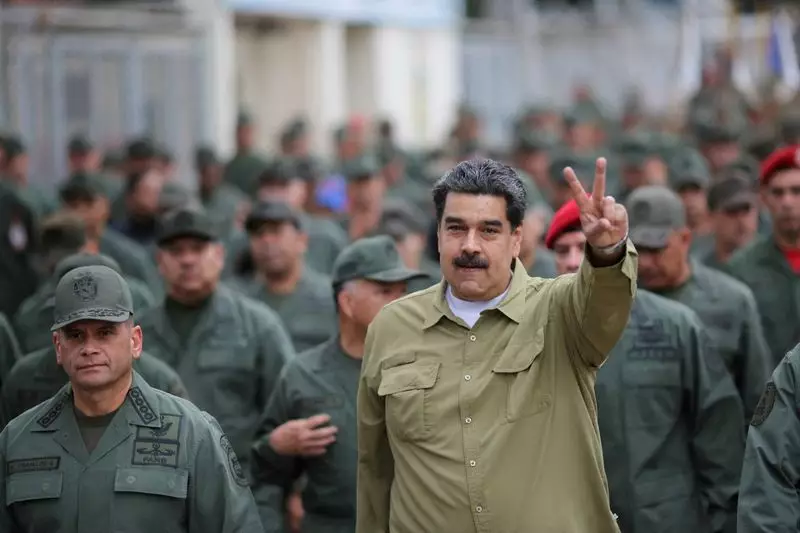
Venezuela's political and economic turmoil has taken a dramatic new turn with its president arriving in the United States and the former US president making a bold declaration about the country's future. The developments signal a significant escalation in the long-standing crisis gripping the South American nation.
Maduro's Surprise Arrival in New York
In a move that has captured international attention, Venezuelan President Nicolás Maduro has landed in New York. His arrival comes at a time of extreme tension, both within Venezuela's borders and in its relations with external powers. The purpose of his visit is closely tied to the ongoing situation at home, where recent events have prompted strong reactions from global leaders.
Details surrounding his travel remain under scrutiny, given the complex diplomatic and legal landscape. Maduro's government has been the subject of intense criticism and sanctions from numerous countries, including the United States, which has recognized opposition leader Juan Guaidó as the legitimate interim president in the past.

Trump's Stark Declaration on US Control
The situation took a more confrontational turn with statements from former US President Donald Trump. Following what he described as a "military operation" within Venezuela, Trump asserted that the United States would take charge of the country's affairs for the immediate future.
"We will run the country for now," Trump stated, framing the intervention as a necessary step. This proclamation suggests a direct involvement that goes beyond the sanctions and diplomatic pressure previously employed by Washington. The nature and scope of the referenced military operation, and the exact meaning of "running" the country, have become central points of global discussion and concern.
This stance represents a hardening of the US position and raises profound questions about sovereignty, international law, and the precedent it sets for foreign intervention in internal conflicts.
Implications and Regional Fallout
The convergence of these two events—Maduro's presence on US soil and Trump's vow of control—creates an unprecedented scenario. Analysts are weighing several potential consequences:
- Diplomatic Crisis: Maduro's trip to New York, likely for United Nations-related engagements, occurs under a cloud of extreme bilateral hostility. His interactions, or lack thereof, with US officials will be closely watched.
- Humanitarian Concerns: Venezuela has been suffering from a deep economic collapse, hyperinflation, and shortages of food and medicine for years. Any shift in governance or increased instability directly impacts the civilian population.
- Regional Stability: Latin American nations and global powers are likely to react strongly to the prospect of direct US administration. This could lead to renewed alliances and fractures within the hemisphere.
- Legal and Political Challenges: Trump's declaration faces legal hurdles and requires a clear operational plan. The response from the current Biden administration, as well as from Congress, will be critical in determining the next steps.
The Venezuelan crisis has long been a flashpoint in international relations, pitting socialist governance against Western liberal democracy, and involving major players like Russia, China, and Cuba. The latest developments threaten to move the conflict from a proxy struggle to a more direct and managed confrontation.
As the world observes, the immediate future of Venezuela hangs in a delicate balance. The actions taken by Maduro's government, the US political establishment, and the international community in the coming days will shape not only Venezuela's destiny but also the norms of global intervention for years to come.