

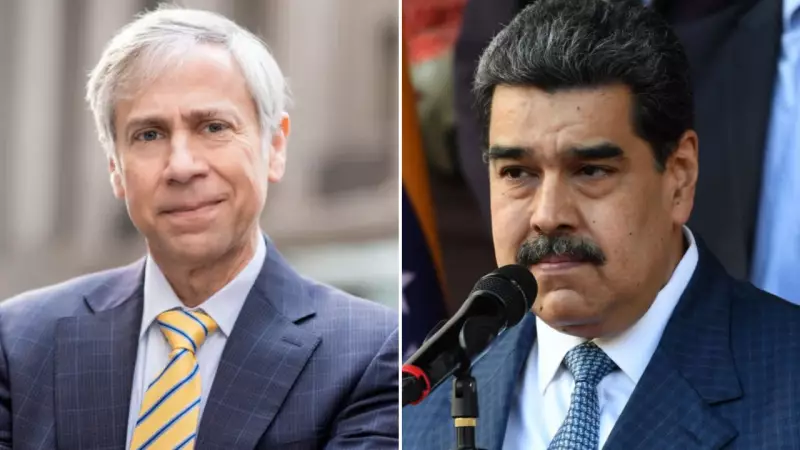
In a dramatic legal development, the deposed Venezuelan president, Nicolás Maduro, has made his first appearance before a United States federal court. The hearing, held in Manhattan, New York, this week, followed a controversial US military operation in Caracas that led to his transfer to American soil.
Courtroom Drama and Firm Denials
During the proceedings, Maduro vehemently rejected all accusations levelled against him by US prosecutors. These charges are sweeping and include serious allegations of narco-terrorism. Addressing the court directly, Maduro declared, "I am innocent. I am not guilty of anything that is mentioned here."
His wife, Cilia Flores, who also faced the court, echoed his sentiments. After identifying herself as the "first lady of the Republic of Venezuela," she entered a plea of "Not guilty. Completely innocent." The presiding judge, Alvin Hellerstein, formally recorded a not guilty plea on Maduro's behalf.

A High-Profile Defence and Questions of Sovereignty
Maduro's defence is being led by one of America's most seasoned criminal lawyers, Barry J. Pollack. With over three decades of experience, Pollack has a formidable reputation, having recently negotiated the release of WikiLeaks' Julian Assange and secured an acquittal for a former Enron executive.
The hearing briefly delved into contentious issues of status and jurisdiction. Maduro insisted to the court that he remains the lawful president of Venezuela. His legal team strongly backed this claim. Near the end of the session, Pollack argued that his client, "is head of a sovereign state and entitled to the privilege" that such a position confers.
Pollack also raised significant questions about the legality of Maduro's military abduction from Venezuela. He warned the court to expect "voluminous" pre-trial motions that will challenge the very foundation of the US case against the Venezuelan leader.
The Road Ahead: A Long Legal Battle
This initial hearing has set the stage for what is anticipated to be a protracted and highly politicised legal fight. The case intertwines complex international law issues with severe criminal charges. The next hearing in this landmark case is scheduled for March 17.
The US government's prosecution of a sitting foreign head of state, whom it does not recognise, marks an unprecedented move. Legal experts predict that arguments over sovereign immunity and the circumstances of Maduro's capture will dominate the early phases of this trial, ensuring it remains a focal point of global attention.






