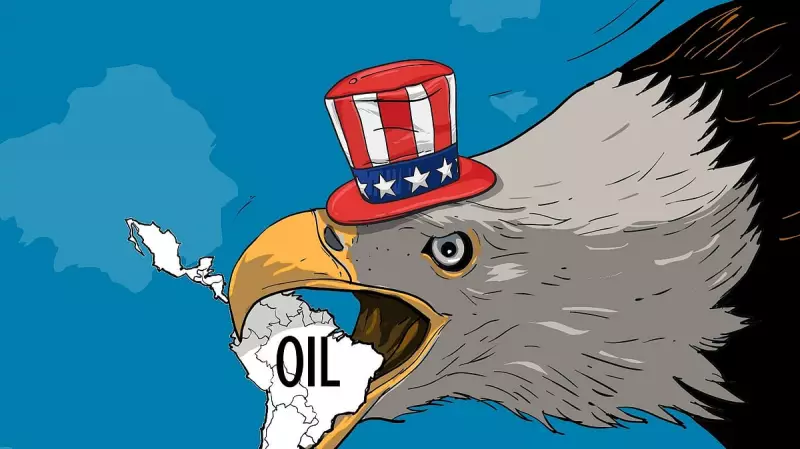
The recent capture of Venezuelan leader Nicolás Maduro has sent shockwaves across the Western Hemisphere, serving as a potent symbol of a resurgent and aggressive United States foreign policy under President Donald Trump. For the left-leaning governments and movements across Latin America, this event is not an isolated incident but a stark confirmation of decades-old warnings. It underscores a perceived reality: that the United States remains an imperial power, willing to intervene militarily and politically in its southern neighbours' affairs to secure its own strategic interests and gain control over valuable natural resources.
The Event and Its Immediate Aftermath
The pivotal event occurred on 05 January 2026, as reported by DHNS. The details surrounding the operation that led to Maduro's capture remain tightly controlled, but the outcome is clear. This action, viewed by many analysts as a direct extension of Trump's "America First" doctrine, represents a dramatic escalation in Washington's long-standing pressure campaign against the Venezuelan government. The move goes beyond sanctions and diplomatic isolation, crossing into a realm of direct physical intervention that many in the region feared was possible.
To observers in countries like Cuba, Nicaragua, and Bolivia, this is a chilling echo of a dark historical pattern. It validates the rhetoric of leaders who have consistently argued that the United States' primary goal in Latin America is not to foster democracy or stability, but to maintain hegemony and facilitate the extraction of wealth. The region's collective memory is long, recalling episodes from the Monroe Doctrine to 20th-century coups, and Maduro's fate is seen as the latest chapter in this contentious narrative.

Strategic Goals and Regional Reactions
The underlying motive, as interpreted by critics of the action, is multifaceted. Firstly, it aims to dominate the geopolitical landscape of the Americas, reasserting U.S. primacy in what it has historically considered its "backyard." Secondly, it is driven by a desire to control Venezuela's vast reserves of oil and other critical natural resources. By removing a hostile government, the path is potentially cleared for U.S. corporations and strategic interests to access these resources under more favourable terms.
This development has instantly polarised the continent. While some opposition figures within Venezuela and conservative governments may privately welcome the move, a significant portion of Latin American political society sees it as a blatant violation of sovereignty and international law. It has galvanised the left, providing a powerful rallying cry and a tangible example of what they describe as "Yankee imperialism." The event is likely to deepen existing divisions within regional bodies and complicate diplomatic relations for years to come.
Long-Term Implications and Conclusions
The capture of Nicolás Maduro sets a profound and dangerous precedent. It signals that the Trump administration is willing to employ extreme measures to achieve its foreign policy objectives in the region, moving beyond covert operations to overt acts of regime change. This could lead to increased instability, not just in Venezuela but across Latin America, as other governments perceived as antagonistic to Washington assess their own vulnerability.
In conclusion, the event of 05 January 2026 is far more than a headline about a single leader. It is a geopolitical earthquake that has redefined power dynamics in the Americas. It has confirmed the deepest suspicions of the Latin American left about U.S. intentions, portraying the United States under Trump as an imperial power actively pursuing domination. The aftermath will involve not only the struggle for Venezuela's future but also a broader continental debate about sovereignty, intervention, and the right of nations to determine their own destinies free from external coercion.