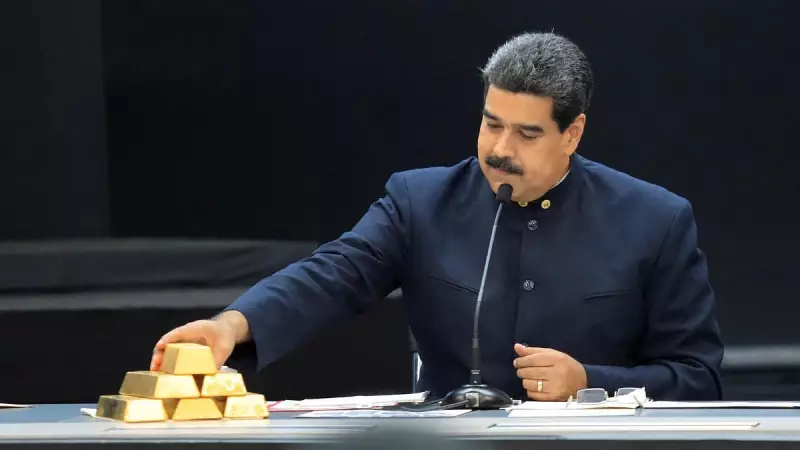
A simple hand gesture by Venezuelan President Nicolas Maduro has sparked conversations about its historical weight and contemporary political meaning. The two-fingered 'V' sign, often casually interpreted as a peace symbol, carries a legacy deeply rooted in 20th-century conflict and propaganda.
The Churchillian Legacy of the 'V' for Victory
The gesture's most famous association is with British Prime Minister Winston Churchill during World War II. In the face of Nazi aggression, Churchill popularized the 'V' sign as a defiant symbol of victory. It was a powerful, non-verbal tool for morale, intended to rally the British public and Allied forces. This wartime context established the gesture as an emblem of resilience and ultimate triumph against adversity.
From Battlefield to Political Stage
Over the decades, the meaning of the 'V' sign evolved. While its wartime origins remain significant, it was later adopted by counterculture movements in the 1960s as a peace symbol, often with the palm facing inward. In modern politics, leaders frequently use it during rallies and public appearances. When Nicolas Maduro employs this gesture, it inevitably draws analysis. Observers question whether it is a simple wave to supporters, a claim of political victory, or a conscious nod to historical symbols of overcoming challenges.

Decoding Maduro's Political Messaging
For a figure like Maduro, leading a nation through intense domestic and international pressure, no public action is viewed in a vacuum. The use of such a historically charged symbol can be interpreted as a strategic communication tool. It may be intended to project confidence, suggest an impending political win, or frame his government's struggle within a narrative of defiance against external pressures, much like Churchill's Britain. The gesture, therefore, transcends a mere photo opportunity; it becomes a part of the broader political discourse surrounding Venezuela.
The incident underscores how historical symbols are repurposed in modern statecraft. As reported by the International New York Times on 06 January 2026, Maduro's gesture reminds us that in politics, imagery is rarely accidental. The 'V' sign continues to be a potent, adaptable symbol, its meaning shifting from wartime victory to complex political statement, depending on who uses it and the context in which it is displayed.