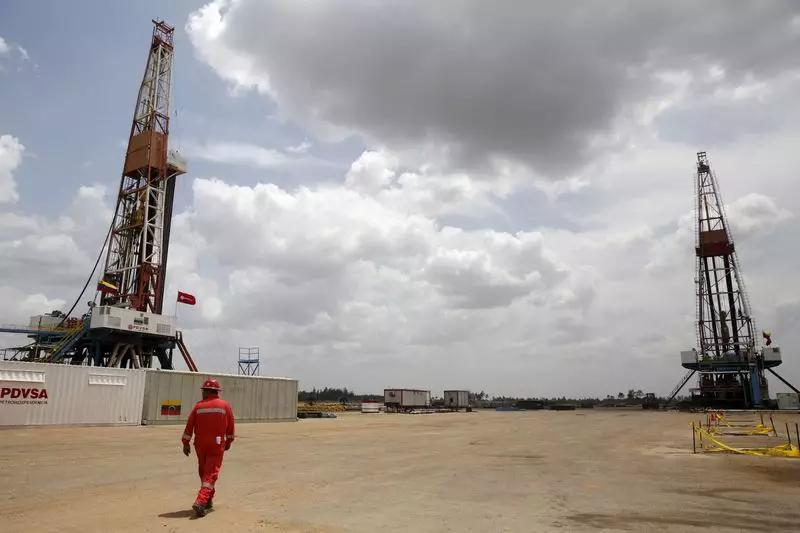
Former US President Donald Trump is reportedly considering a radical and controversial plan to seize Venezuela's state-owned oil assets if he returns to the White House. This ambitious strategy aims to revitalize the crippled industry but confronts a labyrinth of legal, financial, and geopolitical obstacles that experts say may be insurmountable.
The Core of Trump's Controversial Proposal
The plan, as outlined by sources close to Trump, involves using a web of existing US sanctions as a legal foundation. The idea is to take control of assets belonging to Petróleos de Venezuela, S.A. (PDVSA), the national oil company, and hand them over to American or allied private entities for management and development. Proponents argue this could boost global oil supplies and sever a key financial lifeline for the government of President Nicolás Maduro.
This proposal is not entirely new. The Trump administration previously explored similar aggressive options, including a naval blockade and recognizing opposition figures' authority to sign deals on PDVSA's behalf. The current iteration appears to be a more formalized version of these earlier, contentious ideas.

A Mountain of Practical and Legal Hurdles
Industry analysts and legal experts point to a series of formidable barriers that could derail the plan before it even begins.
First, the legal authority for such a seizure is highly questionable. While the US has imposed sweeping sanctions on PDVSA, these are primarily blocking measures that freeze assets under US jurisdiction. Unilaterally seizing and redistracting a foreign nation's sovereign assets on a large scale would be an unprecedented act, likely triggering intense legal battles in international courts and potentially violating principles of state sovereignty.
Second, Venezuela's oil infrastructure is in a state of severe disrepair. Decades of mismanagement, corruption, and underinvestment have left refineries, pipelines, and pumping stations crumbling. Any new operator would need to invest tens of billions of dollars over many years just to restore production to levels seen a decade ago. The financial risk for any private company would be enormous.
Third, PDVSA is buried under a mountain of debt. The company and the Venezuelan state owe creditors, including bondholders and companies like ConocoPhillips, an estimated $150 billion to $200 billion. Any entity taking over PDVSA's assets would immediately inherit this colossal liability, making the venture financially unattractive.
Geopolitical Fallout and Regional Tensions
The geopolitical consequences of such a move would be immediate and severe. It would be viewed by much of the world, particularly China, Russia, and other Latin American nations, as a brazen act of economic imperialism. This could further destabilize the region and push Venezuela into even deeper alliances with US adversaries.
Furthermore, the plan is intertwined with the ongoing territorial dispute between Venezuela and Guyana over the oil-rich Essequibo region. Trump advisors have suggested supporting Venezuelan claims to Essequibo in exchange for a deal on the country's overall oil resources. This approach has alarmed the government of Guyana and could provoke a major regional conflict, undermining decades of diplomatic efforts.
Current US President Joe Biden's administration has taken a different tack, temporarily easing some oil sanctions in response to electoral commitments from Maduro's government. This policy is now under review after Maduro's party faced setbacks in recent elections. The stark contrast between the two potential US approaches highlights the volatile nature of Venezuela policy.
In summary, while Trump's plan to seize and revitalize Venezuela's oil industry reflects a desire for a decisive break from current policy, it is fraught with extreme difficulty. The combination of legal ambiguities, catastrophic infrastructure decay, overwhelming debt, and serious geopolitical risks presents a set of challenges that may ultimately prove too great to overcome, rendering the strategy more of a political statement than a practicable roadmap.