Rubio's Three-Day Middle East Tour
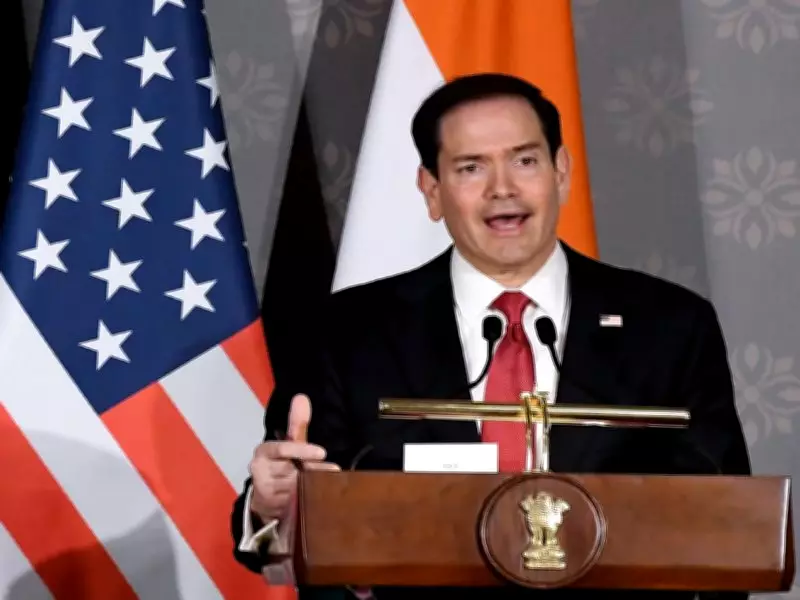
US Secretary of State Marco Rubio is set to embark on a three-day visit to the Middle East starting Tuesday, June 23, 2026, to hold talks on various regional issues, with the US-Iran memorandum of understanding (MoU) taking centre stage. According to a release by the US State Department, Rubio will travel to the United Arab Emirates, Kuwait, and Bahrain from June 23 to 25.
Key Agenda Items
During his visit, Rubio will discuss the secure, safe and free transit through the Strait of Hormuz. He is scheduled to meet with the Gulf Cooperation Council (GCC) in Bahrain. The State Department stated that the Secretary will discuss a range of regional priorities including the memorandum of understanding with Iran, efforts to secure full and free safe transit through the Strait of Hormuz, and the importance of peace and stability in the region. In Bahrain, the Secretary will also meet with the Gulf Cooperation Council to discuss shared priorities across the region.
Iran's Stance on Strait of Hormuz
Earlier, Iran's Parliament Speaker Mohammad Bagher Ghalibaf said that the Strait of Hormuz will not return to its pre-war operational status and asserted that Iran will manage the strategic waterway under its own arrangements, while maintaining adherence to international regulations. According to Iranian state media Press TV, speaking in an interview upon his return from Switzerland on Monday following the conclusion of the initial round of technical talks with the US as part of the 14-point memorandum of understanding between the two sides, Ghalibaf said Iran would exercise control over the key maritime passage going forward. "Everyone should know that the administration of the Strait of Hormuz will never go back to the way it was before the war," he said. "Of course, international regulations will be observed, but Iran will administer the Strait of Hormuz," he added.

Iran's Negotiating Leverage
Ghalibaf further said that Iran had demonstrated its negotiating leverage during recent talks held in Switzerland, claiming that Tehran was able to influence the outcome of discussions. He also alleged that during the negotiations, Iran was able to compel the United States to revise a social media post within an hour where US President Donald Trump threatened Iran against supporting its 'proxy groups' in the region, particularly in Lebanon, in a veiled reference to Hezbollah, describing it as evidence of Iran's diplomatic impact. Referring to the broader regional situation, the Iranian Speaker said ongoing negotiations were linked to wider conflicts, including developments in Lebanon, and reiterated Iran's position that it does not trust the United States. "We have never trusted the Americans; we don't trust them now, and it is only reasonable to remain distrustful in the future," he said.
Background of US-Iran MoU
The remarks came after the conclusion of the initial round of technical talks as part of the MoU aimed at ending the hostilities in West Asia between the US and Iran, with both sides agreeing to establish a High-Level Committee and a roadmap towards a final agreement within 60 days.