

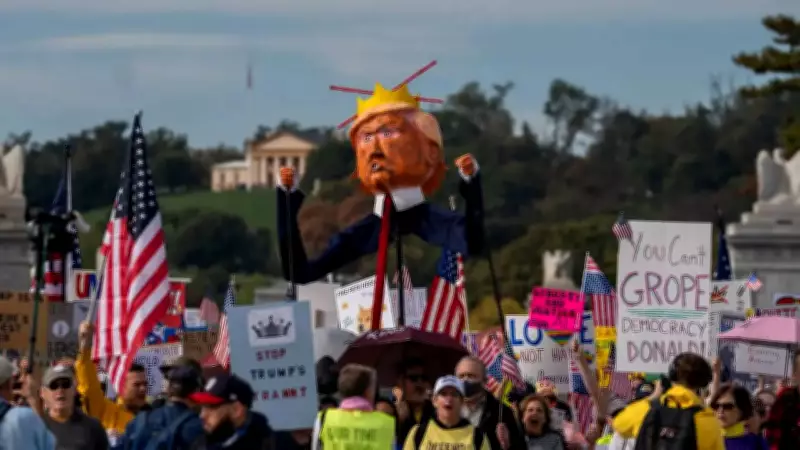
Massive 'No Kings' Protests Sweep Across the United States
From bustling city squares to quiet small towns, thousands of demonstrators took to the streets in coordinated "No Kings" protests across the United States. These widespread rallies represent a significant mobilization against the policies and leadership style of former President Donald Trump, with participants voicing strong opposition to what they perceive as an erosion of democratic norms and institutions.
Nationwide Opposition to Trump's Leadership
The protests were organized as a direct response to Donald Trump's political agenda, with demonstrators criticizing his approach to governance and expressing concerns about democratic values. Organizers coordinated more than 3,200 separate protest events spanning all 50 states, with additional demonstrations occurring in international cities, highlighting the movement's impressive scale and sophisticated coordination.
Historic Mobilization Ambitions
Protest organizers have set their sights on making these demonstrations the largest single-day mobilization in American history, reflecting the intensity of public dissatisfaction with current political directions. These rallies mark the third phase of the "No Kings" movement, building upon earlier protests that attracted between 4 to 7 million participants, demonstrating steady growth in public engagement and support for the cause.

Geographic Expansion Beyond Major Cities
A notable development in this protest wave is the significant expansion into smaller communities. Nearly two-thirds of all protests occurred outside major metropolitan areas, with substantial increases in participation from suburban regions and small towns. This geographic spread indicates a broadening of political activism beyond traditional urban centers.
Major Gathering in Saint Paul, Minnesota
One of the largest demonstrations was anticipated in Saint Paul, Minnesota, where organizers expected over 100,000 participants to gather at the state capitol. This location holds particular symbolic importance due to ongoing tensions surrounding immigration enforcement policies in the region, making it a focal point for protest activities.
Celebrity Support and High-Profile Involvement
The protests gained significant visibility through the involvement of prominent public figures. Musical icons Bruce Springsteen and Joan Baez were scheduled to headline events, while acclaimed actor Robert De Niro helped organize and speak at rallies. This celebrity participation amplified media attention and brought additional public awareness to the movement's objectives.
Key Issues Driving Protest Participation
Participants voiced opposition to multiple policy areas, including:
- Strict immigration enforcement measures
- Deployment of federal agents in urban areas
- Concerns about threats to democratic institutions
- Economic pressures affecting ordinary citizens
- United States military involvement in the Iran conflict
Political Context Ahead of Midterm Elections
The timing of these protests is particularly significant as they occur ahead of upcoming midterm elections. Organizers report a surge in political activism even in traditionally Republican-leaning states and key suburban areas that often play decisive roles in national election outcomes. This increased engagement suggests potential shifts in the political landscape as voters express their concerns through direct action.
The "No Kings" movement continues to demonstrate growing public discontent with current political directions, with these latest protests representing both a geographic expansion and intensification of opposition activities across the United States.






