

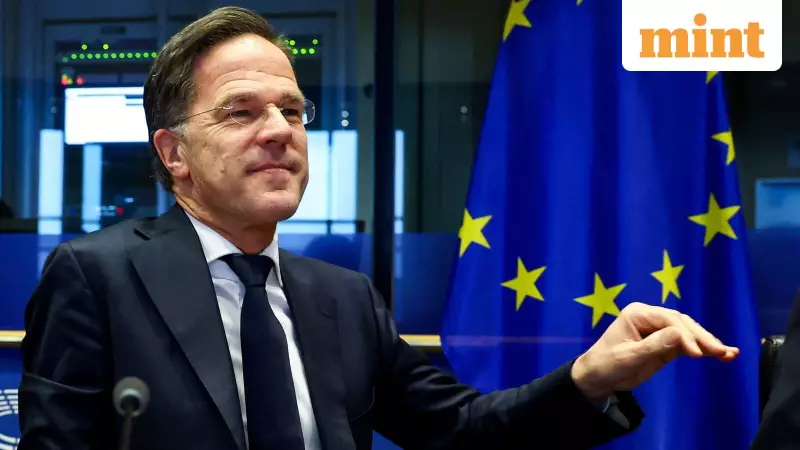
In a stark warning delivered to European lawmakers, NATO Secretary General Mark Rutte emphasized on Monday that Europe remains incapable of defending itself without the crucial military support of the United States. This statement comes amid growing calls for European strategic autonomy following recent diplomatic tensions over Greenland, as reported by international news agency AFP.
Transatlantic Tensions and European Defense Realities
The diplomatic landscape has been unsettled by US President Donald Trump's earlier threats to seize the autonomous Danish territory of Greenland, which sparked a crisis within the transatlantic alliance. Although Trump later withdrew these threats after discussions with Rutte last week, the incident has fueled debates about Europe's military independence.
A Wake-Up Call for European Defense Advocates
The Greenland controversy has provided fresh impetus to voices advocating for a more assertive European stance against Trump's policies and a reduction in military reliance on Washington. However, Rutte's comments serve as a sobering counterpoint to these aspirations.

Addressing the European Parliament, the former Dutch prime minister was unequivocal in his assessment. "If anyone thinks here again, that the European Union, or Europe as a whole, can defend itself without the US -- keep on dreaming. You can't," Rutte told lawmakers, according to AFP reports.
The Staggering Cost of European Self-Defense
Rutte outlined the monumental challenges Europe would face in attempting to achieve true defensive autonomy. He indicated that EU member states would need to double their defense spending from the current NATO target of five percent to an unprecedented ten percent of their budgets.
Furthermore, the NATO chief highlighted the enormous financial burden of developing independent nuclear capabilities. "You would lose the ultimate guarantor of our freedom, which is the US nuclear umbrella," Rutte explained, adding that European countries would need to invest "billions and billions" in building their own nuclear arsenals to replace American protection.
The Practical Implications of Strategic Autonomy
Rutte's warning underscores several critical realities about European defense capabilities:
- Europe currently lacks the integrated military infrastructure to operate independently of US support
- The financial requirements for achieving true defensive autonomy would be prohibitive for most European economies
- Nuclear deterrence remains fundamentally dependent on American strategic assets
- The technological gap between European and American military capabilities presents significant challenges
Concluding his remarks with a dose of realism, Rutte offered a blunt assessment to those advocating for complete European military independence: "So hey, good luck."
This developing story highlights the ongoing tensions within the transatlantic alliance and the complex realities of European defense policy in an era of shifting global power dynamics.






