Israeli Prime Minister Defiant on Iran Strategy Amid Ceasefire Tensions
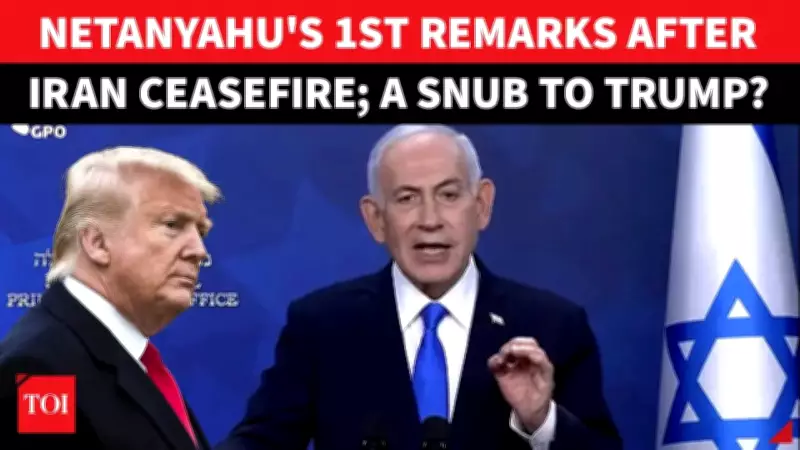
Israeli Prime Minister Benjamin Netanyahu has delivered a stark televised address asserting that Israel's military campaign against Iran remains active and unresolved, despite an existing ceasefire agreement brokered with the United States. In a statement that signals potential escalation, Netanyahu emphasized that Israel retains critical objectives to accomplish in its confrontation with Iran.
'Finger on the Trigger' Warning and Strategic Objectives
Netanyahu declared that Israel's "finger is on the trigger," indicating a state of high readiness to re-engage in military operations if deemed necessary. He clarified that Israel will pursue its goals through diplomatic negotiations or, if required, through renewed military action. This declaration underscores a firm stance that the ceasefire does not equate to an end of hostilities from Israel's perspective.
The Prime Minister's remarks follow recent Israeli strikes in Lebanon, which have added complexity to regional dynamics. The United States has subsequently clarified that Lebanon was not included in the ceasefire agreement with Iran, highlighting potential gaps in the accord's scope and implementation.

Regional Reactions and Accusations of Ceasefire Violations
Concurrently, Iranian Parliament Speaker Mohammad Bagher Ghalibaf has accused the United States of violating the terms of the ceasefire, pointing to ongoing tensions and mistrust between the involved parties. This accusation from Iranian leadership suggests that the ceasefire remains fragile and subject to interpretation and dispute.
The situation reflects broader geopolitical strains, with Israel maintaining a proactive military posture while navigating international diplomatic frameworks. Netanyahu's address reinforces Israel's autonomous strategic calculus, independent of external agreements, in addressing perceived threats from Iran.
Implications for US-Israel Relations and Regional Stability
Netanyahu's vow to defy the ceasefire, if interpreted as challenging US diplomatic efforts, could strain relations with the United States, which has been instrumental in mediating the agreement. The Prime Minister's emphasis on military readiness signals a prioritization of national security objectives over diplomatic compromises.
As regional actors like Lebanon become flashpoints, the ceasefire's effectiveness and durability are increasingly questioned. Israel's actions and statements suggest a preparedness for rapid escalation, keeping the Middle East on edge amid ongoing conflicts and political maneuvering.