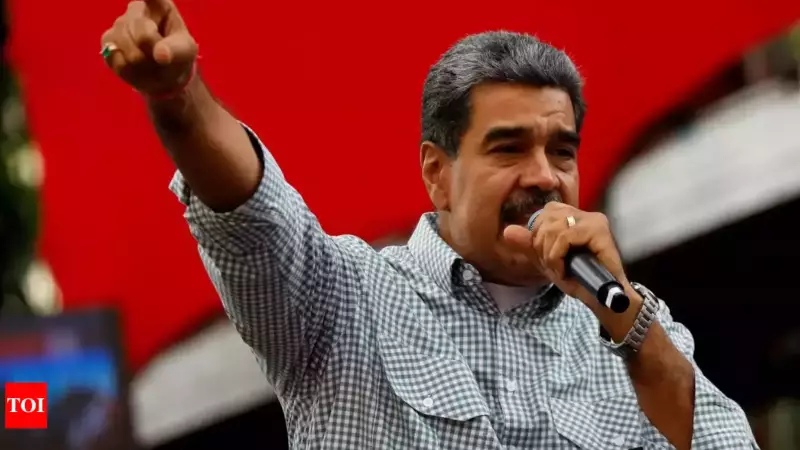
In a rapid and highly coordinated response, major cities across the United States witnessed a wave of protests following the dramatic capture of Venezuelan leader Nicolas Maduro. The mobilisation, unfolding overnight, saw US-based socialist, Marxist, and communist organisations swiftly move from online messaging to physical demonstrations, condemning the arrest as an act of "imperial aggression" by the American state.
From Social Media to Street Mobilisation
The response began taking shape on social media platforms soon after news broke from Caracas. Using identical language, graphics, and slogans, protest calls urged supporters to join an "emergency day of action." By morning, this digital campaign had translated into physical rallies in cities including New York and Washington, DC. Organisers claimed participation across dozens of locations nationwide, showcasing a remarkable speed of organisation.
At the heart of this mobilisation were long-established activist groups with openly anti-imperialist and socialist ideologies. Key organisations amplifying the calls included the ANSWER Coalition, the Party for Socialism and Liberation, and The People's Forum based in New York. Their circulated messages framed Maduro's capture not as a legitimate law-enforcement operation but as an illegal act of regime change driven by US power and corporate interests.

A Prepared Narrative Takes Hold
The early framing of the event proved crucial. Within minutes of initial reports, sympathetic media platforms and activist accounts began labelling the operation an "illegal bombing" and a "kidnapping." This specific language was quickly echoed across networks. The consistency in tone and timing suggested a high degree of preparation rather than spontaneous public outrage. Online posts cascaded in a staggered but disciplined sequence, effectively moving supporters from commentary to direct action.
As the day progressed, international and domestic narratives began to merge. Statements from US activist leaders condemning the operation used language similar to that of governments allied with Caracas, reinforcing claims of American aggression and imperial overreach. Protest organisers strategically urged participants to view Venezuela not as an isolated incident but as part of a broader struggle against US dominance, capitalism, and global exploitation.
Familiar Patterns and Broader Goals
The protests themselves followed a pattern seen in earlier movements opposing US foreign policy. Demonstrators carried professionally printed signs, chanted rehearsed slogans, and shared livestreams that were instantly reposted on aligned digital platforms. Speakers at rallies framed the moment as part of a long-running ideological battle, calling for sustained mobilisation beyond a single day of protest.
The rhetoric extended beyond opposition to Maduro's capture to encompass domestic political aims. Organisers repeatedly described their mission as dismantling "American imperialism" and replacing the current political and economic system with socialist alternatives. In speeches and online broadcasts, activists portrayed the protests as a home-front extension of a global struggle, explicitly linking events in Venezuela to wider campaigns against US institutions, corporations, and foreign policy.
By the afternoon, protest footage and supportive commentary dominated the same channels that had launched the overnight calls, creating a powerful sense of momentum. Organisers celebrated the speed of the response as proof of a mature and ready activist network, capable of activating its base within hours of a major geopolitical development.