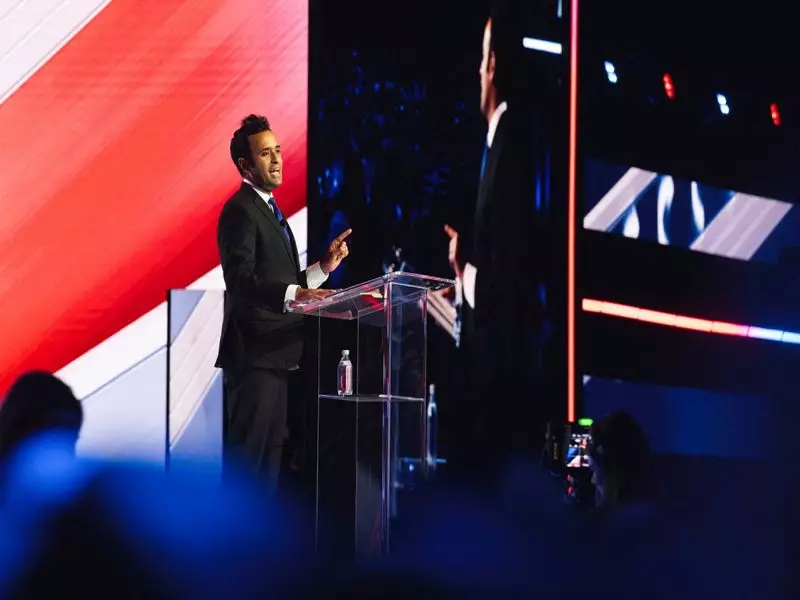
Vivek Ramaswamy, the prominent Indian-American entrepreneur and political figure, has made a decisive move to withdraw from active social media engagement. This step comes as a direct response to a disturbing wave of racially charged abuse and slurs targeting him and his family. The incident casts a stark light on the toxic underbelly of online political discourse in the United States.
A Campaign Marred by Hate Speech
The vitriol erupted in the context of Ramaswamy's campaign for the Republican nomination for governor in the pivotal state of Ohio. As a high-profile candidate of Indian descent, his bid for political office unfortunately became a magnet for bigotry. Ramaswamy publicly confirmed that he and his family were subjected to explicit racial slurs and hateful comments across various social media platforms.
This was not an isolated incident involving a few anonymous trolls. The volume and nature of the abuse indicated a coordinated effort to intimidate and disparage the candidate based solely on his ethnic background. The attacks represent a severe violation of civil political debate, shifting focus from policy and ideology to base prejudice.

The Decision to Disengage
Confronted with this relentless hostility, Vivek Ramaswamy chose to step back. He announced his decision to opt out of active participation on social media channels, a space he had previously used effectively for communication and outreach. This move underscores the personal toll such campaigns of hate can exact on public figures and their loved ones.
Ramaswamy's exit from the digital town square is significant. It highlights a growing dilemma for politicians, especially those from minority communities: how to engage with the public in the digital age while shielding oneself from pervasive online hatred. His action is a stark protest against the platforms that often allow such toxicity to fester with inadequate moderation.
Broader Implications for Politics and Society
The targeting of Vivek Ramaswamy raises urgent questions about the state of American politics and social media's role in it. First, it exposes the persistent challenges faced by ethnic minority candidates seeking high office in the US, even in the 21st century. The incident suggests that for some, race remains a weapon in the political arena.
Second, it forces a reckoning with the culture of social media platforms. The ease with which users can launch anonymous, hate-filled attacks continues to be a major flaw. Ramaswamy's withdrawal is a high-profile indictment of the failure to create safe, constructive spaces for political dialogue online.
Furthermore, this event could influence the Ohio governor's race and similar campaigns. It may deter other qualified individuals from diverse backgrounds from entering politics, fearing similar abuse. Conversely, it could galvanize support for candidates standing against such bigotry, turning a negative into a rallying cry for a more inclusive politics.
The story of Vivek Ramaswamy's social media exit is more than a campaign update. It is a microcosm of the clash between an increasingly diverse political representation and the archaic forces of racism, amplified through modern technology. The response from his party, opponents, and the platforms themselves will be closely watched as a measure of the health of democratic engagement in the digital era.