

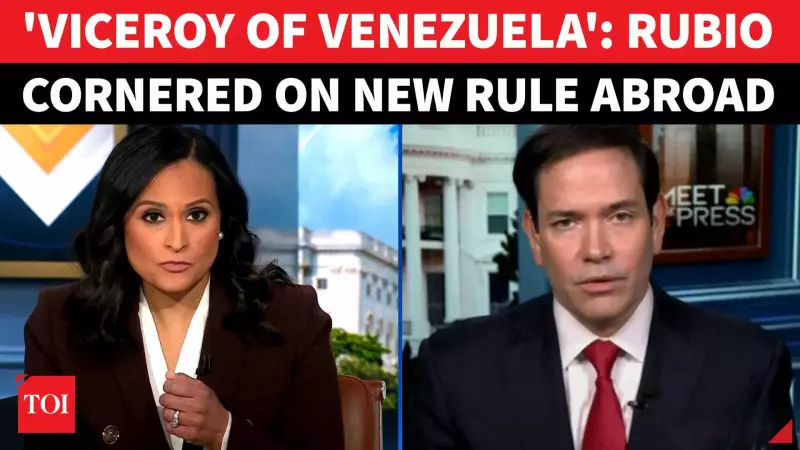
US Secretary of State Marco Rubio found himself in the hot seat during a live television appearance, where he was pointedly asked if he had become the de facto ruler of Venezuela. This confrontation came in the wake of the dramatic capture of the country's President, Nicolás Maduro, and his wife by American forces.
A Tense Exchange on National Television
During an interview on NBC’s flagship programme, Meet the Press, the host did not mince words. Rubio was directly questioned on whether Washington was now effectively "running" Venezuela. The Secretary of State notably sidestepped a clear yes or no response to this loaded inquiry.
Instead, Rubio pivoted to emphasise that the United States anticipates significant "changes" in Venezuela's governance. He stated these changes must align with American national interests, a comment that has sparked widespread analysis and concern.

The Fallout and Rising Debates
This televised exchange has ignited a fierce international debate. Critics and political observers are now questioning the true extent of US intentions in the South American nation. The core issue revolves around Venezuelan sovereignty and the nature of Washington's involvement.
Many are asking if the US role has now moved far beyond traditional diplomacy and into the realm of direct political control. The use of the term "Viceroy" during the interview is particularly symbolic, evoking historical images of colonial rule and undermining national self-determination.
Broader Implications and Reactions
The incident, which aired on January 5, 2026, adds another layer of complexity to an already volatile situation. The capture of President Maduro was a monumental event, and Rubio's hesitant response has done little to clarify the United States' long-term plan for Venezuela's political future.
This ambiguity fuels anxieties about overreach and sets a precedent for how powerful nations might intervene in the affairs of others. The discussion is no longer just about the change of a regime but about the principles of international law and state autonomy in the modern geopolitical landscape.






