

US Secretary of State Signals Force Option for Venezuela Cooperation
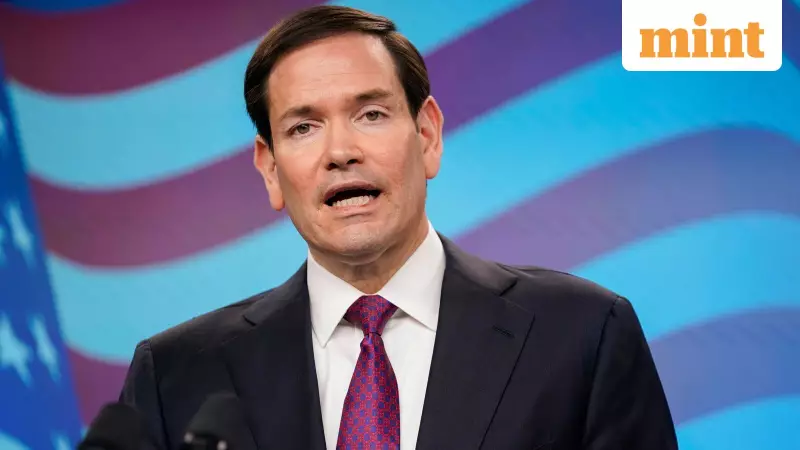
In a significant escalation of diplomatic pressure, US Secretary of State Marco Rubio has declared that the Trump administration stands ready to employ military force if Venezuela's acting leadership fails to align with American strategic interests. The warning came during Rubio's testimony before the Senate Foreign Relations Committee, marking his first public congressional appearance since the controversial operation that captured former Venezuelan President Nicolas Maduro.
Strategic Demands and Economic Conditions
Rubio outlined specific conditions that Venezuela's Acting President Delcy Rodriguez must meet to avoid potential military action. The Secretary of State emphasized that while the United States maintains no troops on Venezuelan soil and is not formally at war with the nation, the administration expects full cooperation on several critical fronts.
The primary US objectives include:

- Opening Venezuela's energy sector to American companies for exploration and development
- Providing preferential access to Venezuelan oil production for US markets
- Utilizing Venezuela's oil revenue to purchase American manufactured goods
Rubio argued that Rodriguez's own political and economic interests should naturally align with advancing these goals, suggesting that cooperation would strengthen bilateral ties between the two nations. "We are prepared to use force to ensure maximum cooperation if other methods fail," Rubio stated, while adding, "it is our hope that this will not prove necessary."
Congressional Scrutiny and Diplomatic Shifts
The hearing unfolded against a backdrop of intense congressional scrutiny following the January 3 military operation in Caracas that resulted in Maduro's capture and subsequent transport to New York to face criminal charges including narco-terrorism. Rubio praised the mission as a successful law-enforcement operation achieved without American casualties.
However, Democratic lawmakers sharply criticized the raid as an illegal act of war that bypassed congressional approval and risks drawing the United States into prolonged engagement in Venezuela. Even members of Rubio's own Republican party raised concerns about transparency, execution details, and long-term strategic planning.
Amid this high-stakes policy debate, the State Department formally notified Congress of plans to deploy additional diplomatic personnel to Caracas to prepare for a potential reopening of the US Embassy, which has remained closed since 2019. This move signals a significant diplomatic shift following years of strained relations.
Engagement with Opposition Figures
Further underscoring Washington's evolving approach, Rubio announced plans to meet with Venezuelan opposition leader Maria Corina Machado at the State Department. Machado, who recently emerged from years in hiding to accept a Nobel Peace Prize, has aligned with US policy initiatives and represents the broader struggle over Venezuela's political future following Maduro's ouster.
This meeting highlights the administration's continued engagement with democratic alternatives in Venezuela, even as it pressures the interim government to comply with American strategic demands. The dual approach of diplomatic engagement alongside military warnings reflects the complex geopolitical calculations surrounding Venezuela's political transition and resource wealth.
The developments come at a critical juncture in US-Venezuela relations, with economic interests, energy security, and regional stability all hanging in the balance as both nations navigate this unprecedented chapter in their diplomatic history.






