

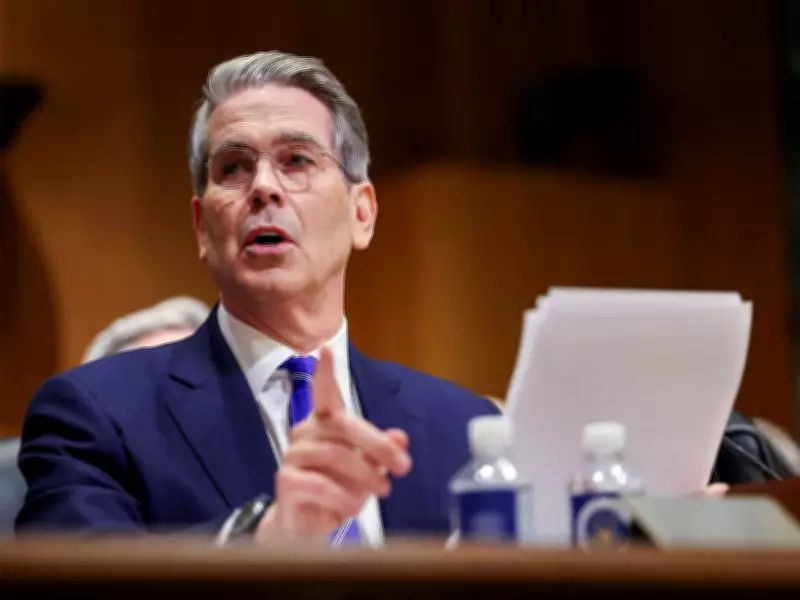
US Treasury Secretary Scott Bessent's recent remarks emphasizing that access to the American market should not come without conditions or consequences have raised concerns about potential bottlenecks in the ongoing India-US trade deal negotiations. Both sides are keen to ensure that their respective countries' economic interests are not compromised.
Bessent's Speech Highlights Reciprocal Trade and National Capacity
Addressing The Economic Club of New York's America 250 Gala Dinner, Bessent outlined key principles of American economic statecraft. He stated, "We opened our market because it helped to create a more prosperous world. And we tolerated imbalances because American economic strength appeared unassailable. Over time, however, those choices hardened into habits. Habits into assumptions. And assumptions, left unexamined, into vulnerabilities."
Bessent stressed that access to the US market should be reciprocal and consistent with American national interest. He said, "To repair those imbalances with the world is not to retreat from it. On the contrary, it is to engage on terms that make America stronger. It is to insist on trade that is fair, reciprocal, and consistent with our national interest."

India's Stance on Tariff Advantage
Commerce Minister Piyush Goyal on June 26 stated that the India-US trade deal had been finalized but would not come into force until New Delhi secures a clear tariff advantage over competing manufacturing economies such as Vietnam, Thailand, the Philippines, China, Malaysia, Bangladesh, and Sri Lanka. "Until that framework for securing a competitive advantage is finalised, we cannot bring a US deal into force. The day the US finds the appropriate tools and legal backing to provide us with that competitive advantage over our competitors, the deal is on," Goyal said.
Reactions from Indian Experts and Officials
Sridhar Vembu, scientist and former CEO of Zoho Corporation, commented on Bessent's speech, noting that it outlined what India would describe as its own 'Swadeshi economic policy.' On his official X handle, Vembu wrote, "The first principle he states: 'The first is that economic security begins with national capacity… The nation that depends on its adversaries for critical inputs is not truly sovereign. And the nation that reduces its economy to consumption is not truly prosperous.' Powerful words. I agree with him, and India must resolutely apply the same principles." Vembu added that East Asian nations are strongly Swadeshi too, and the Swadeshi Jagran Manch has long advocated similar principles.
Details of the Trade Deal Negotiations
Goyal's remarks came after meetings with US Trade Representative Ambassador Jamieson Greer in New Delhi from June 22 to 24. During these meetings, both sides discussed key aspects of the proposed agreement, including enhanced market access, digital trade, supply-chain resilience, the reduction of non-tariff barriers, and greater collaboration in strategic sectors.
Bessent's latest remarks indicate that the India-US trade deal could face a bottleneck, as both sides are keen to ensure that their respective countries' economic interests are not compromised. The US Treasury Secretary emphasized that economic security begins with national capacity, stating, "The nation that depends on its adversaries for critical inputs is not truly sovereign. And the nation that reduces its economy to consumption is not truly prosperous."






