

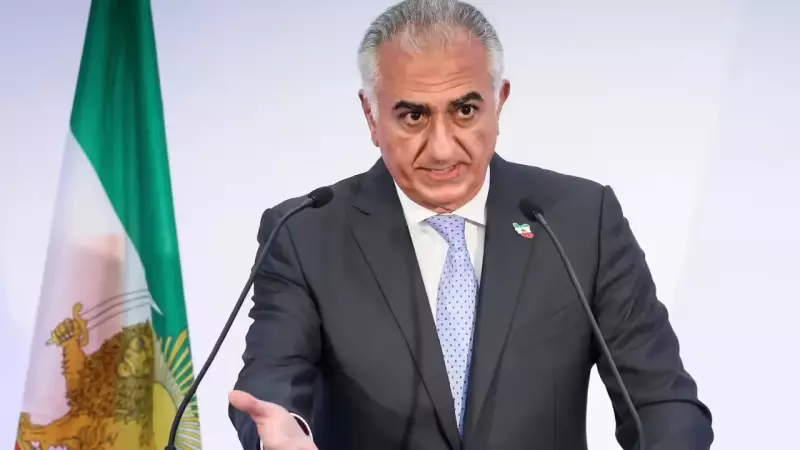
In a significant political development, Reza Pahlavi, the US-based son of Iran's last monarch, has publicly declared his readiness to return to his homeland and spearhead a movement towards establishing a democratic government.
Pahlavi's Public Declaration on US Television
The announcement was made during an appearance on the popular American news program Fox News "Sunday Morning Futures". Pahlavi stated unequivocally, "I'm prepared to return to Iran at the first possible opportunity. I'm already planning on that." This statement marks a clear escalation in his political involvement regarding Iran's future.
He further elaborated on his envisioned role, emphasizing a commitment to a transparent and people-led process. "My job is to lead this transition to make sure that no stone is left unturned, that in full transparency, people have an opportunity to elect their leaders freely and to decide their own future," Pahlavi told the host.

Context of Support for Protest Movements
This televised offer does not emerge in a vacuum. For years, Reza Pahlavi has been an active voice from his base in the United States, consistently aligning himself with Iranian citizens demanding political change. His recent messages have repeatedly praised the courage of Iranians protesting for their rights.
In a notable parallel, he has echoed the sentiments of the very movement that overthrew his father, Shah Mohammad Reza Pahlavi, in the 1979 Islamic Revolution: a call for an end to state repression and authoritarian rule. This positioning attempts to bridge a historical divide by focusing on a common contemporary goal of democratic governance.
Potential Implications and Road Ahead
The offer from the former crown prince introduces a new variable into the complex equation of Iranian politics and the opposition diaspora. While he presents himself as a unifying figure to oversee a transition, the practical path for his return and the level of support he commands inside Iran remain major questions.
The Iranian government has historically viewed the Pahlavi family with hostility, and such a proposition is likely to be dismissed outright by the current establishment in Tehran. However, his declaration amplifies the ongoing discourse about Iran's political future and provides a focal point for international media coverage of the opposition.
Analysts will be watching closely to see how other opposition groups, both inside and outside Iran, respond to Pahlavi's overture. The key challenges for any transition plan include achieving broad-based consensus and navigating the formidable apparatus of the existing state.






