

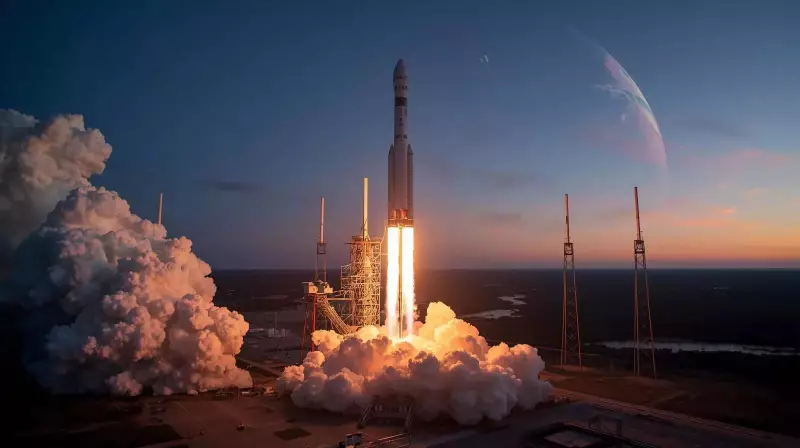
The year 2026 began with a significant, though understated, milestone in space. Against the evening sky over California, a rocket ascended, carrying a satellite designed not for spectacle but for steady, silent observation of our planet.
Mission Details: A Quiet Launch with Major Implications
On January 2, 2026, a SpaceX Falcon 9 rocket lifted off from Vandenberg Space Force Base in California just after 6:00 PM local time. Its payload was the COSMO SkyMed Second Generation Flight Model 3 satellite, a crucial component of Italy's advanced Earth observation system. This launch was particularly notable as it ended an unusual sixteen-day gap for SpaceX, the company's longest pause in several years.
The mission had faced several delays, initially planned for late December 2025. Technical issues, including a fault in the launch pad's hydraulic system, required additional checks and pushed the launch into the new year. However, the eventual flight was flawless, with the rocket's first-stage booster completing a routine landing.

The COSMO SkyMed Satellite: Italy's All-Seeing Eye in Orbit
Built by Thales Alenia Space for Italy, this satellite is the third in the four-satellite COSMO SkyMed Second Generation constellation. The program is a joint venture between the Italian Space Agency (ASI) and the Italian Ministry of Defence, embodying a dual-use philosophy.
Unlike satellites that rely on optical imagery, COSMO SkyMed uses synthetic aperture radar (SAR). This technology allows it to see through clouds and operate day or night, providing uninterrupted monitoring capabilities. Its data is invaluable for:
- Tracking environmental changes and deforestation.
- Monitoring natural disasters like floods, earthquakes, and landslides.
- Supporting national defence planning and surveillance.
This steady, all-weather reliability is its core strength, even if the data it gathers rarely results in public-facing images.
What This Launch Signals for the Future
This successful mission sets a clear tone for the actors involved in 2026. For Europe and Italy, it strengthens sovereign Earth observation capabilities, adding another precise tool for security and environmental stewardship. The program highlights how modern space assets seamlessly blend civilian and strategic applications.
For SpaceX, launching a key international government payload so early in the year underscores its evolution. It signals that the company is a reliable partner for global clients beyond its own Starlink projects. The Falcon 9 has transitioned from a novel rocket to dependable space infrastructure, its familiarity now a primary asset. The clean, on-time launch after delays demonstrated operational maturity.
The satellite is now in orbit, beginning its years-long task of silently watching Earth. While the roar of the launch has faded, the long-term impact of its data on disaster management, security, and environmental science will resonate far longer, proving that the most important missions are often the quietest.






