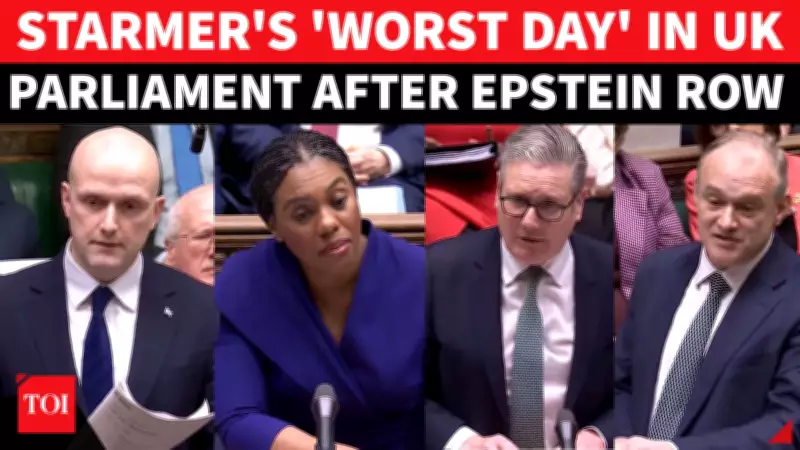
UK Prime Minister Keir Starmer Confronts Heated Parliamentary Debate Over Epstein Controversy
The House of Commons witnessed a dramatic and fiery session as Prime Minister Keir Starmer came under severe cross-party attack regarding appointments connected to the expanding Jeffrey Epstein controversy. The debate, one of the most contentious of the parliamentary year, centered on questions of judgement, accountability, and integrity in public office.
Opposition Leaders Launch Scathing Criticisms
Conservative Party leader Kemi Badenoch led the assault, accusing the Prime Minister of attempting to deflect blame by "throwing staff under a bus." She sharply questioned Starmer's decision-making concerning controversial peerage nominations linked to individuals associated with the Epstein scandal, demanding greater transparency.
Stephen Flynn, leader of the Scottish National Party (SNP), delivered a particularly biting remark, labeling Starmer "the most gullible former Director of Public Prosecutions in history." This criticism referenced Starmer's prior legal career and implied a failure of professional discernment.

Ed Davey, the Liberal Democrat leader, joined the criticism, warning of a "catastrophic lack of judgement" in the Prime Minister's appointments. Davey called for the immediate implementation of stronger ethical standards and vetting processes for individuals in public life to restore trust.
Starmer's Defense and Counterattack
Prime Minister Starmer vigorously defended his record during the heated exchange. He stated that he had accepted full responsibility for the appointments in question and had already taken decisive corrective action where necessary. Shifting the focus, Starmer launched a counteroffensive against the Conservative Party's own governance record.
He highlighted what he described as systemic failures during the Conservatives' tenure, including issues related to public safeguarding and the handling of sensitive cases. The Prime Minister argued that his administration was committed to higher standards and that the opposition's attacks were politically motivated.
Broader Themes and Political Fallout
The debate rapidly expanded beyond the immediate Epstein links to touch on several deeply sensitive national issues. References were made to:
- The handling of grooming gang cases and past safeguarding failures.
- The overall erosion of public trust in political institutions.
- The essential need for impeccable standards in public office.
This parliamentary clash has significantly raised the political temperature in Westminster. It poses serious questions about leadership, legacy, and the mechanisms of accountability within the UK government. The episode is likely to have lasting repercussions for Starmer's premiership and the public's perception of political integrity.