

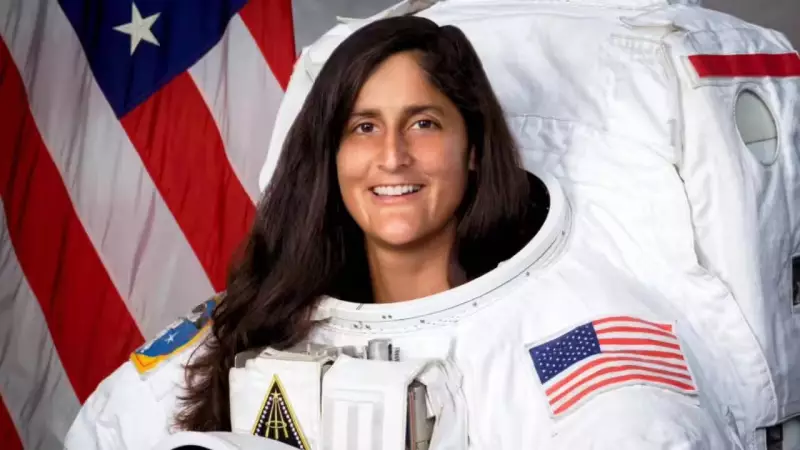
Sunita Williams' Retirement Message Signals New Chapter for NASA
As NASA astronaut Sunita Williams concludes her remarkable spaceflight career, her retirement message offers profound insights into both continuity and transformation within the United States space program. Speaking on her final day of service, Williams emphasized how decades of foundational work have paved the way for future missions and international partnerships.
A Vision for Collaborative Space Exploration
Williams' words arrive at a pivotal moment as NASA transitions into a new era of human space exploration characterized by three key elements: international cooperation, commercial spacecraft integration, and ambitious plans extending beyond low Earth orbit. Rather than focusing on individual achievements, her statement highlights the collective effort spanning generations that makes space travel possible.
"I hope the foundation we set has made these bold steps a little easier. I am super excited for NASA and its partner agencies as we take these next steps, and I can't wait to watch the agency make history."

This powerful quote reveals two crucial perspectives:
- Recognition that space exploration progress builds upon work accumulated over many years
- Illustration of NASA's strategic shift toward future missions utilizing new technologies, international collaboration, and commercial partnerships
A Career Built on Preparation and Persistence
NASA selected Sunita Williams as an astronaut in 1998, following her distinguished service as a US Navy test pilot. Throughout her 27-year career, she accomplished:
- Multiple long-duration missions to the International Space Station
- Over 600 cumulative days spent in space
- Extensive scientific research and space station operations
- Numerous spacewalks contributing to station maintenance and upgrades
These missions weren't isolated events but rather interconnected experiences that progressively enhanced spacecraft systems, astronaut training protocols, and international coordination mechanisms. Williams' reference to "the foundation we set" perfectly captures this layered developmental process where each mission builds upon previous accomplishments.
Witnessing Transformational Change
Williams' tenure at NASA coincided with extraordinary evolution in space exploration. She experienced firsthand:
- The Space Shuttle program era
- The International Space Station's complete operational lifecycle
- The emergence of commercial crew vehicles
- Her final assignment with Boeing's Starliner program
This diverse experience positioned her perfectly to understand NASA's strategic transition toward utilizing multiple private companies for human spaceflight. This shift enables NASA to redirect internal resources toward ambitious future programs like the Artemis missions aimed at returning humans to the Moon.
The Critical Role of Partnerships
Williams' specific mention of "partner agencies" underscores a fundamental reality of contemporary space exploration: success requires extensive collaboration. The International Space Station itself represents an unprecedented partnership between NASA, Roscosmos, ESA, JAXA, and CSA, enabling continuous human presence in space for over two decades.
As NASA prepares for lunar missions and deeper space exploration, these international and commercial partnerships become increasingly essential. Williams' statement acknowledges this collaborative framework and suggests that future achievements will emerge from cooperative efforts rather than any single agency's work.
Looking Toward the Horizon
The phrase "these next steps" in Williams' quote points directly toward NASA's post-International Space Station era. The Artemis program and related initiatives will test new spacecraft, establish lunar infrastructure, and prepare for extended missions beyond Earth's orbit. These ambitious endeavors build directly upon research conducted aboard the space station, including:

- Human health studies in microgravity
- Advanced materials science research
- Life support system development
- Long-duration mission protocols
Williams' excitement about NASA "making history" while she assumes an observational role reflects the evolving nature of astronaut participation as space exploration methodologies transform.
A Legacy of Continuity
Significantly, Williams' retirement message frames this transition not as an ending but as part of an ongoing continuum. The contributions of astronauts like Williams continue supporting missions long after their active service concludes. Safety protocols, training methodologies, and operational procedures they helped develop persist and evolve, creating enduring institutional knowledge.
This perspective aligns perfectly with how space programs fundamentally operate: through cumulative progress where each achievement builds upon previous work, and major goals are reached through sustained effort rather than isolated breakthroughs. Williams' words thoughtfully contextualize her career within this broader narrative of human space exploration.





