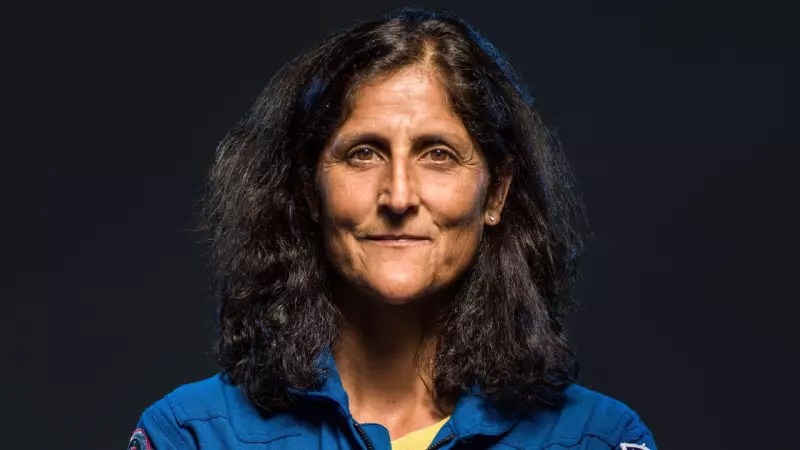
After an absence of twelve years, celebrated NASA astronaut Sunita Williams has returned to India, reconnecting with her roots and reflecting on a storied career that has taken her to the stars. Her arrival marks a poignant homecoming, filled with personal memories and professional insights from her groundbreaking missions in space.
A Heartfelt Homecoming and Family Memories
Williams expressed deep emotion about being back in India, recalling her previous visit in 2013 as one of her most cherished experiences. "Being in India with my father is one of my best memories," she shared. "Seeing where he grew up and lived was incredible." That trip allowed her to trace her father's footsteps in his home state of Gujarat, creating bonds that have endured over time.
Reuniting with family and friends during that visit was described as wonderful, though this return is bittersweet. "Unfortunately, my father is not with us anymore, and I will not be going to Gujarat on this visit," Williams noted. Despite this, her excitement for the current trip is palpable, driven by the support she has received from many across India. "I know so many here were praying for our safe return, and I would like to use this opportunity to say, 'Thank you'," she added gratefully.

Anticipation for Kerala and the Power of Literature
This journey includes her first-ever visit to Kerala, a state she has long dreamed of exploring. "I am excited to see this part of the country!" Williams exclaimed. Her father had often described Kerala as a magical place, home to many Indian saints, fueling her curiosity. A highlight of the trip is the Kerala Literature Festival, which aligns with her passion for books. "I love that books can offer everyone a way to learn," she remarked, emphasizing the transformative role of reading in her life.
From childhood favorites like animal and mystery books to adult interests in historical novels, literature has been a constant source of inspiration. "Reading was a huge influence on me as a child," Williams recalled. "As an adult, I find historical fiction interesting; it provides insight into the people who made history." This love for stories has shaped her perspective, both on Earth and beyond.
Lessons from Extended Space Missions
Williams recently completed a mission to the International Space Station (ISS) that was initially planned for eight days but extended to nearly nine months due to technical issues with Boeing's Starliner. This unexpected duration offered profound personal insights. "Long missions are what I know, and I have been fortunate enough to participate in several," she said. The extension allowed her to adapt fully to space, enabling significant scientific research.
However, the physical and emotional challenges were substantial. "Nine months is a long time, so one must be physically diligent to maintain bone density and muscle mass," Williams explained. The toughest aspect was missing time with her family and dogs. "My family knew I would, so they sent pictures as well as 3D models of them up to me in space," she shared, highlighting the unconditional love of her pets. "Dogs are just pure beings who love unconditionally. I am so fortunate to feel that love every day."
The mission also underscored the power of support. "The most incredible thing was how much support and love we got from not only family and friends but also from strangers," Williams reflected, acknowledging the global community that rallied behind the crew.
Navigating Spacecraft Challenges and Return to Earth
When Starliner faced technical problems, leading to a decision to return on SpaceX instead, Williams and fellow astronaut Butch Wilmore placed their trust in the expertise of countless professionals. "The decision was much bigger than Butch and I," she noted. "We knew there were hundreds if not thousands of people working on this problem, and their expertise was what we needed to trust." While waiting for the decision was difficult, having a clear direction ultimately eased the situation.

After returning to Earth in 2025, readjusting to gravity took time. "Similar to previous flights, but it just took a bit longer to get my running speed and endurance back," Williams said, adding that she is still working on regaining full physical form.
Embracing Indian Heritage in Space
Williams has often carried symbols of her Indian heritage into space, such as the Bhagavad Gita and Upanishads, along with items from her mother's Slovenian background. "I took these things to represent the people who made me who I am," she explained. "I am very indebted to my parents and their cultures. They have provided me with a foundation that has helped me through lots of trying situations." These mementos serve as a tangible connection to her roots while orbiting far from home.
Record-Breaking Achievements and the Future for Women in Space
Holding the record for the most cumulative spacewalk time by a woman—62 hours and 6 minutes across nine spacewalks—Williams has witnessed significant progress in gender equality in space exploration. "There are opportunities for anyone who is ready for the task," she observed. Her involvement during the construction and operation of the ISS provided unique chances, and she looks forward to more opportunities, such as spacewalks on the moon. "I am excited for the next generation of astronauts to break all of these records!" she enthused.
Personal Connections and Views from Space
Williams fondly remembers pioneering astronaut Kalpana Chawla, with whom she shared bike rides and discoveries in nature. "I remember her friendship and curiosity," she said. "There was always something in nature to share with her."
From the cupola of the ISS, India appears breathtakingly beautiful. Williams once likened the Himalayas to "the wrinkles on a skirt when bunched up," a result of tectonic shifts. On recent missions, she noticed the extensive light infrastructure across the subcontinent, a testament to its dense population and connectivity. "It is obvious that so many people live there and how light connects them," she remarked, also spotting numerous fishing boats along the coast, guiding the eye to shore.
As for the search for extraterrestrial life, Williams remains optimistic. "We will get there someday," she stated, reflecting on the ongoing explorations within our solar system.
Looking Ahead: Language and Legacy
With retirement, Williams plans to focus on learning Gujarati, her father's language. "I will get better, and that means hopefully spending more time in Gujarat," she affirmed, aiming to deepen her cultural ties.
Her return to India not only celebrates personal milestones but also inspires future generations, blending the wonders of space with the warmth of home.