

Supreme Court Delivers Major Blow to Trump's Global Tariff Policy
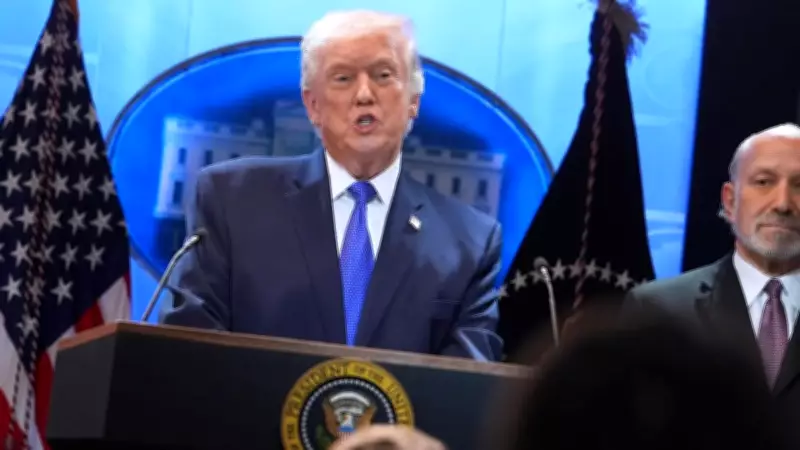
In a dramatic development that unfolded during a White House meeting, President Donald Trump received news that the Supreme Court had struck down his controversial global tariff policy. The ruling arrived while Trump was midway through a closed-door session with governors in the State Dining Room.
A Tense Moment in the White House
According to individuals present in the room, a trade adviser handed Trump a note informing him of the Supreme Court's decision. "So it's a loss, then?" Trump reportedly asked the adviser. He then addressed the assembled governors, stating that while he appeared calm externally, he was seething internally. Trump described the ruling as a "disgrace" before abruptly cutting short a question-and-answer session to prepare his response.
Broad Consequences and Legal Implications
The Supreme Court's decision is expected to have far-reaching consequences, potentially forcing the White House to develop an entirely new legal justification for presidential tariffs. This ruling marks the first instance during Trump's second term where the Supreme Court has decisively overturned one of his policies, following earlier cases where the administration was granted considerable leeway.

Trump's Anticipation and Public Reaction
Trump and his advisers had anticipated this outcome, with some senior officials long believing the administration would lose the case. During a speech in Georgia on Thursday, Trump expressed frustration over the Supreme Court's deliberation time, stating, "I've been waiting forever, forever. And the language is clear that I have the right to do it as president." In recent months, Trump had warned that the court's decision was a matter of "life or death" and claimed that overturning the tariffs would trigger economic disaster.
Surprising Judicial Alignment
The 6-3 decision, written by Chief Justice John Roberts, did not break along predictable ideological lines. Roberts was joined by conservative justices Neil Gorsuch and Amy Coney Barrett—both appointed by Trump during his first term—alongside the court's three liberal justices to strike down the policy. The three remaining conservative justices dissented from the majority opinion.
Trump's Personal Criticism of Justices
In response to the ruling, Trump launched personal attacks against Republican-appointed justices, including those he nominated, calling them "fools" and "lapdogs for Democrats." He told reporters, "They're very unpatriotic and disloyal to our Constitution. It's my opinion that the court has been swayed by foreign interests."
Legal and Political Ramifications
The Supreme Court's decision represents a significant check on presidential power in trade policy and sets an important precedent for future administrations. The ruling comes at a critical juncture in Trump's presidency and is likely to influence ongoing debates about executive authority, international trade relations, and the separation of powers within the US government.






