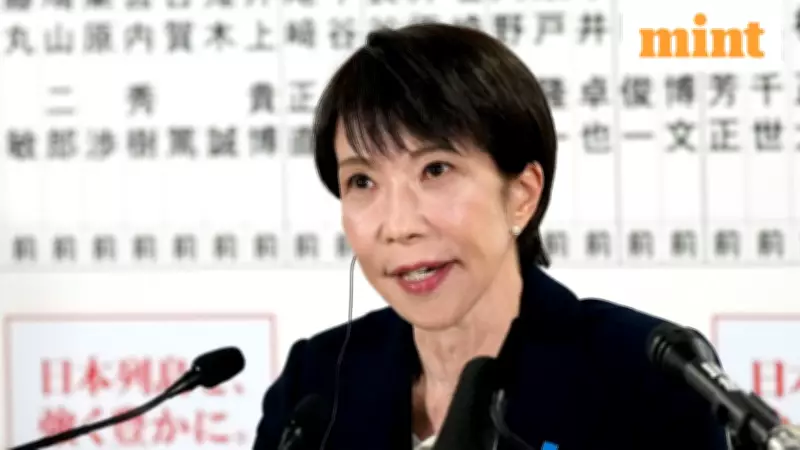
Japan's Prime Minister Sanae Takaichi Achieves Decisive Election Triumph
In a stunning political development, Japanese Prime Minister Sanae Takaichi has led her Liberal Democratic Party (LDP) to a resounding victory in the lower house of Parliament, defying global trends of political unpopularity. The election results, announced on Sunday, indicate the LDP is on track to secure a comfortable majority independently, marking a significant rebound for the party after recent electoral setbacks that forced it into coalition governments.
A Personal and Political Mandate
The victory represents a personal triumph for the 64-year-old Takaichi, Japan's first female Prime Minister, who enjoys a robust 67% approval rating that significantly bolstered her party's performance. While facing relatively weak opposition, Takaichi demonstrated political acumen that eluded her recent LDP predecessors, capitalizing on public sentiment to achieve this electoral breakthrough.
With her new coalition partners, Prime Minister Takaichi will command a formidable two-thirds majority in Parliament, granting her administration the power to override opposition in the weaker upper house and implement her policy agenda with unprecedented legislative authority.

Geopolitical Context and International Relations
The election outcome carries substantial geopolitical implications, particularly regarding Japan's relationship with China. Beijing's attempts to pressure Japan through export restrictions and tourism bans—retaliation for Takaichi's public statements about the security threat posed by a potential Chinese takeover of Taiwan—appear to have backfired spectacularly.
This pattern of Chinese diplomatic pressure failing to achieve intended outcomes mirrors similar situations in Taiwan and Australia, where Beijing's assertive tactics have often strengthened rather than weakened resolve among targeted nations.
As a prominent figure within the LDP's conservative, pro-American faction, Takaichi advocates for increased defense spending—a position gaining urgency amid China's extensive military expansion. Her administration has navigated the complexities of managing relations with the United States under President Trump's unpredictable leadership while seeking to stabilize crucial trade ties between the two allies.
Economic Challenges and Policy Directions
Despite her electoral success, Takaichi faces significant economic challenges, particularly regarding Japan's persistent inflation concerns. The Prime Minister has proposed a two-year suspension of Japan's 8% consumption tax on food items, though economists note that the root causes of inflation are primarily monetary, stemming from the Bank of Japan's efforts to normalize policy after prolonged periods of negative interest rates.
Her campaign platform included proposals for increased government spending, a Keynesian approach with a mixed historical record in Japan. In the current global environment of elevated government debt, such non-defense expenditure increases carry particular risks, potentially prompting investors to demand higher returns to finance Japan's growing debt burden.
Japan's fundamental economic challenge lies not in demand deficiency but rather in supply-side constraints, including limited entrepreneurial dynamism and domestic competition. Takaichi's political mentor, the late Prime Minister Shinzo Abe, pursued deregulation policies that contributed to economic growth—an approach that may offer the most promising path forward for the current administration.
Strategic Implications and Future Governance
The clear LDP majority provides Takaichi with substantial political capital and governing flexibility, enabling her to pursue her agenda with a strong democratic mandate. This development holds particular significance for international relations, as the United States and other democratic nations seek reliable allies to counterbalance China's expanding global influence.

The election results reinforce Japan's position as a crucial strategic partner in maintaining regional stability and countering what many perceive as the Chinese Communist Party's imperial ambitions. As Takaichi assumes her strengthened mandate, the international community will closely monitor how she addresses both domestic economic concerns and Japan's evolving role in global geopolitics.