

Greenland, the world's largest island, has been thrust back into international headlines following former US President Donald Trump's renewed comments about acquiring it. Framing the potential move as a matter of "national security," Trump told reporters, "We need Greenland," shortly after discussing Venezuela. While this political rhetoric grabs attention, a quieter, more significant trend has been unfolding for years: some of the planet's wealthiest individuals have been making strategic investments in Greenland's resources and political landscape.
The Billionaire Backers: From Political Links to Mineral Hunts
Trump's interest is not new. His former national security adviser, John Bolton, revealed that Trump first considered buying Greenland in late 2018. The idea reportedly came from businessman Ronald Lauder, a longtime friend and fellow Wharton School alumnus. Lauder's influence extends beyond suggestion; he has invested in a Greenlandic freshwater bottling company. This firm is co-owned by Jørgen Wæver Johansen, a local chair of the governing Siumut party and the husband of Greenland's foreign minister, Vivian Motzfeldt. This connection has sparked concerns about potential political influence through business channels.
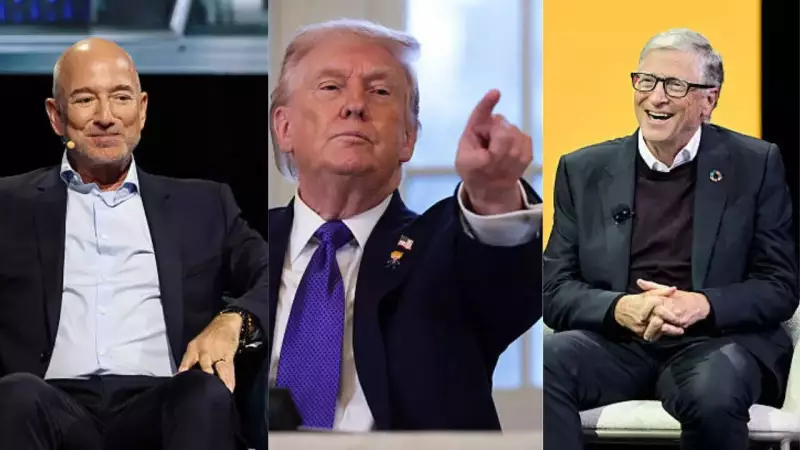
Concurrently, tech titans are pursuing a different path. Jeff Bezos, Bill Gates, and Michael Bloomberg have invested in KoBold Metals, a company using AI to explore for rare earth minerals critical for electronics. Their investments, channeled through Gates's Breakthrough Energy fund, began in 2019. In December 2024, a major funding round valued KoBold at nearly $3 billion. Earlier, in 2022, OpenAI's Sam Altman also invested through his Apollo Projects fund. As global focus returns to Greenland, these billionaires may be poised to invest further.

Strategy Over Commerce: The Growing American Footprint
Experts question whether all these moves are purely financial. Arctic security analyst Marc Jacobsen suggests Lauder's Greenland ventures lack "any economic substance" and are more about "strategy and gaining control" through links to key decision-makers. Jacobsen also notes a visible increase in the American presence in Greenland, aided by new direct flights from New York to Nuuk. He points out the difficulty in distinguishing between tourists and those with strategic investment interests.
Elon Musk has publicly supported the idea of U.S. annexation if Greenland's people desire it, posting on X (formerly Twitter) in January 2024 that they "would be most welcome."
Greenland's Firm Stance: Self-Determination Above All
Amid this external pressure, Greenland's leadership has responded with a unified voice. The island's political parties issued a joint statement firmly rejecting any notion of being "up for grabs." They declared, "We do not want to be Americans… we want to be Greenlanders," emphasizing their right to self-determination and criticizing external forces attempting to influence their future.
The situation presents a complex tableau where political bluster, billionaire capital, and geopolitical strategy converge on the icy terrains of Greenland. While global powers and investors eye its strategic location and untapped mineral wealth, the people of Greenland assert their own identity and sovereignty, setting the stage for an ongoing geopolitical narrative.






