Trump's Surprise Venezuela Phone Call Revealed
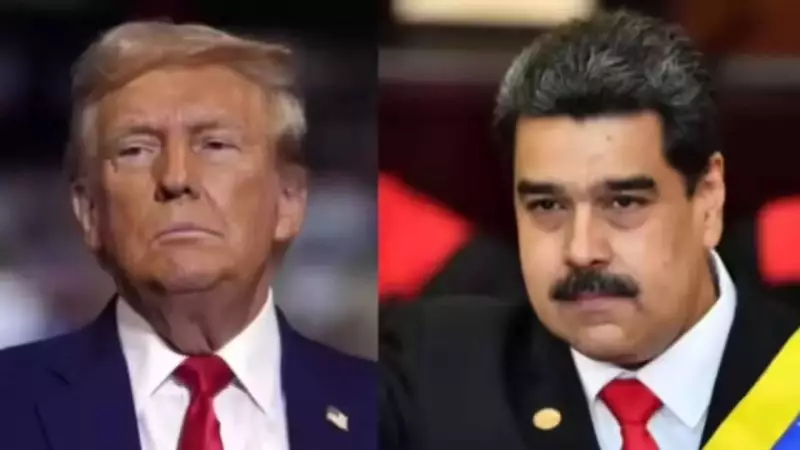
In a significant diplomatic development, US President Donald Trump publicly confirmed on Sunday that he recently engaged in direct communication with Venezuelan leader Nicolas Maduro. This revelation comes at a particularly tense moment when the United States has substantially increased its military footprint in the Caribbean region, creating a serious standoff with the Caracas government.
The confirmation emerged during Trump's interaction with reporters, though the President remained notably vague about the specifics and outcome of the discussion. When pressed for details about the nature of their conversation, Trump offered a characteristically ambiguous response: "I wouldn't say it went well or badly. It was a phone call."
Military Buildup and Possible Amnesty Terms
Multiple reports indicate that the phone conversation between the two leaders touched upon several critical issues, including the possibility of arranging a face-to-face meeting and potential amnesty terms for Maduro if he agreed to relinquish power. This development occurs against the backdrop of what US officials describe as the largest American military presence in the region in decades.

The United States has significantly escalated its military posture by conducting bomber flights in proximity to Venezuelan airspace and deploying the formidable USS Gerald R Ford aircraft carrier to the region. This substantial military mobilization represents Washington's most assertive approach toward Venezuela in recent years.
Adding to the escalating tensions, President Trump declared on Saturday that all airspace "above and surrounding" Venezuela should be considered "closed in its entirety" - a move that the Maduro government immediately condemned as a "colonial threat" and a direct assault on Venezuela's sovereignty.
Drug Cartels and Congressional Scrutiny
The US government maintains that its military operations specifically target drug cartels, some of which American authorities claim maintain connections with the Maduro administration. Since early September, more than 80 people have been killed in US strikes targeting vessels suspected of drug trafficking operations.
Meanwhile, lawmakers from both major political parties have expressed support for congressional reviews of US military strikes conducted against boats suspected of smuggling drugs in the Caribbean Sea and eastern Pacific. This bipartisan concern emerged following a Washington Post report alleging that Defense Secretary Pete Hegseth issued a verbal order to eliminate all crew members during a strike operation on September 2.
Democratic Senator Tim Kaine voiced grave concerns about these allegations, stating unequivocally that "This rises to the level of a war crime if it's true." While congressional members acknowledged uncertainty about the report's accuracy, even some Republican legislators agreed that attacking survivors of an initial military strike raises serious legal and ethical questions.
The Venezuelan foreign ministry characterized Trump's recent comments as a "hostile, unilateral and arbitrary act" while simultaneously revealing that US authorities had suspended deportation flights for Venezuelan migrants. Despite this suspension, the ministry noted that more than 13,000 Venezuelan migrants had been returned this year following diplomatic negotiations.
As military assets continue to accumulate in the Caribbean and diplomatic channels show unexpected activity, the international community watches closely to determine whether these developments represent a prelude to more extensive military engagement or whether backchannel diplomacy might produce an unexpected resolution to the prolonged Venezuela crisis.