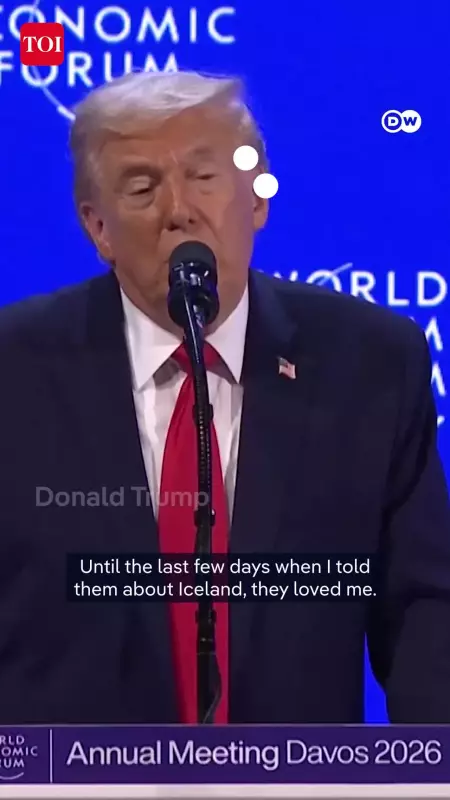
In a notable diplomatic moment at the prestigious World Economic Forum in Davos, Switzerland, former US President Donald Trump seemingly confused two distinct Nordic nations during his address. Observers and media outlets reported that Trump appeared to mix up Greenland and Iceland while discussing international relations, creating a buzz among attendees and sparking widespread criticism.
Geographical Confusion at Global Forum
The incident occurred during Trump's speech at the World Economic Forum, a gathering of global leaders, business executives, and policymakers. According to reports, Trump referenced Greenland in a context that suggested he might have meant Iceland, or vice versa, highlighting a potential lapse in geographical awareness. This gaffe quickly drew attention from international media, with many questioning the implications for US foreign policy and diplomatic engagements.
Immediate Reactions and Criticism
The apparent confusion between Greenland and Iceland prompted immediate reactions from political analysts and critics. Many pointed out that such a mistake could undermine confidence in US leadership on the global stage, particularly given the strategic importance of Arctic regions where both Greenland and Iceland are located. Critics argued that this incident reflects broader concerns about Trump's understanding of international geography and its impact on diplomatic relations.

Media coverage of the event emphasized the significance of the error, noting that it occurred in a high-profile setting where precision in language and knowledge is expected. The buzz generated by this gaffe has led to discussions about how such moments can influence public perception and international discourse, especially in forums like Davos that focus on economic and political cooperation.
Context of Trump's Previous Statements
This is not the first time Trump has faced scrutiny over geographical references. His past comments on international matters have sometimes been marked by similar confusions or oversimplifications, leading to debates about his approach to global affairs. The Davos incident adds to a pattern that critics say could affect US credibility in international negotiations and alliances.
Supporters of Trump, however, might dismiss the gaffe as a minor slip or argue that it does not detract from his broader policy goals. Nonetheless, the attention it has received underscores the heightened scrutiny that world leaders face in today's media landscape, where every word is analyzed for its implications.
Broader Implications for International Relations
The confusion between Greenland and Iceland at Davos raises questions about the role of geographical knowledge in diplomacy. Both nations have distinct political, economic, and environmental contexts, with Greenland being an autonomous territory of Denmark and Iceland a sovereign republic. Misidentifying them could signal a lack of nuanced understanding that is crucial for effective international engagement.
In the context of the World Economic Forum, where discussions often center on global challenges like climate change, trade, and security, such errors might be seen as undermining the seriousness of the dialogue. This incident could prompt calls for greater emphasis on geographical literacy among leaders to foster more informed and productive international relations.
Overall, Trump's Davos speech has ignited a conversation about the importance of accuracy in global leadership, with the Greenland-Iceland mix-up serving as a focal point for broader critiques of his diplomatic style and knowledge base.