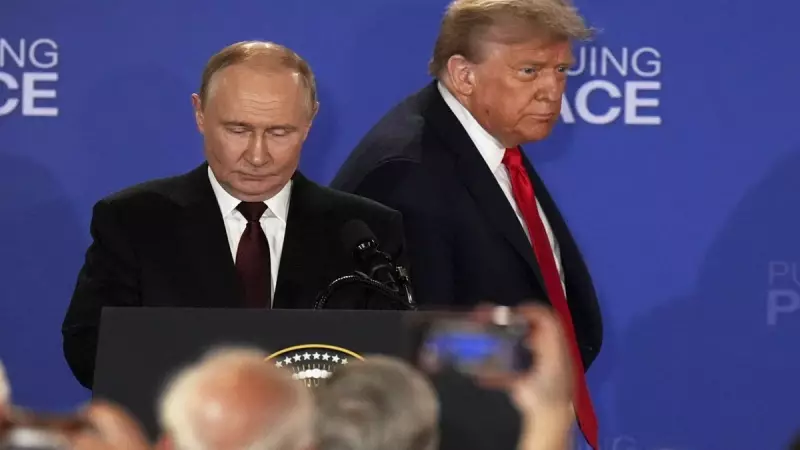
In a significant intervention into a major international dispute, former United States President Donald Trump has outright rejected claims made by the Kremlin. The Russian government had alleged that Ukraine was behind a drone attack targeting a residence of President Vladimir Putin. Trump has categorically labeled this narrative as false, injecting his perspective into the ongoing Russia-Ukraine conflict.
Trump's Public Rejection of the Kremlin Narrative
The controversy erupted when Russian officials, including Kremlin spokesman Dmitry Peskov, asserted that Ukrainian forces had launched a drone strike aimed at Putin's Novo-Ogaryovo residence near Moscow. This alleged incident was presented as a serious escalation. However, taking to his social media platform, Truth Social, on January 5, 2026, Donald Trump issued a forceful rebuttal. He dismissed the Russian claims, stating the story was fabricated and did not align with the facts as he understood them.
Trump's statement directly challenges the official Russian position, creating a rare moment where a leading Western political figure sides against the Kremlin's version of events in this context. His comments have added a new layer of complexity to the information war surrounding the prolonged conflict. Analysts note that this public denial from a figure with significant political influence in the US undermines Russia's attempt to shape the global narrative around the event.

Context and Details of the Alleged Incident
According to the initial reports from Russian state media, the alleged drone attack occurred in the early hours of January 5, 2026. The target was identified as the Novo-Ogaryovo official residence, a location where President Putin is known to spend considerable time. Russian air defense systems were said to have intercepted and destroyed the unmanned aerial vehicle before it could cause any damage. No injuries were reported.
Ukrainian authorities swiftly denied any involvement in the incident. A senior advisor to President Volodymyr Zelenskyy called the accusation a "provocation" and suggested it was a staged event meant to justify further Russian aggression or mobilize domestic support. The timing of the Kremlin's claim, and Trump's rapid response, have drawn intense scrutiny from global observers. Security experts have questioned the technical feasibility of such a long-range drone strike penetrating Moscow's heavily defended airspace.
Geopolitical Repercussions and Analysis
Trump's decision to publicly call the Russian drone story false carries immediate political weight. It creates a clear divergence from the Kremlin's propaganda efforts and aligns him, in this specific instance, with the Ukrainian and broader Western skepticism of Russian claims. This move is seen as part of his broader foreign policy posture, which has often included skepticism towards traditional intelligence assessments and a willingness to challenge established narratives.
The incident and its aftermath highlight several key points:
- Information Warfare: The conflict continues to be fought fiercely in the realm of media and public perception, with both sides aggressively promoting their narratives.
- Trump's Influence: Even out of office, Trump's statements on international affairs can shift discourse and apply pressure on current administrations.
- Escalation Risks: Allegations of attacks on national leaders, whether true or false, raise the stakes and could potentially be used to justify severe retaliatory measures.
The White House and the Pentagon have yet to issue an official assessment of the alleged drone attack, maintaining a more cautious line than Trump. However, his intervention ensures the story remains in global headlines and subjects the Kremlin's version to heightened skepticism. As the war drags on, such episodes of disputed facts and high-profile denials are likely to continue, shaping international opinion and the diplomatic landscape surrounding the crisis.