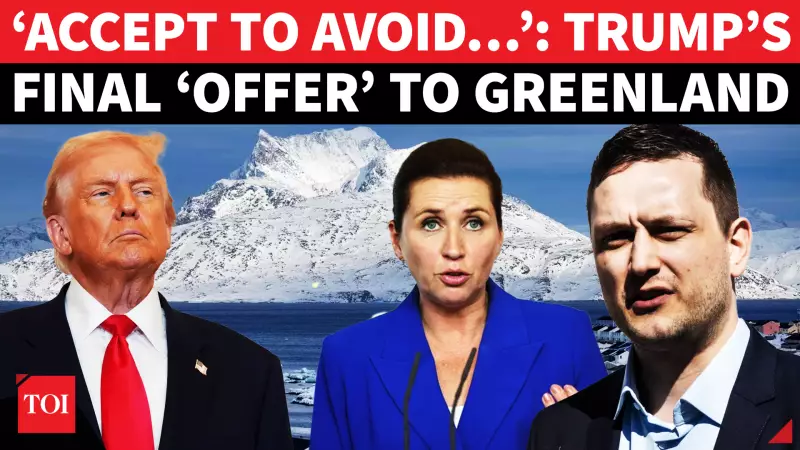
In a move that has sent shockwaves across diplomatic circles, US President Donald Trump has once again put the autonomous Danish territory of Greenland in the global spotlight. By floating a potential deal for the vast, ice-covered island, Trump has ignited fresh fears in Europe about growing American pressure and ambition in the strategically crucial Arctic region.
Trump's Arctic Ambition: "America Needs Greenland"
The controversy erupted when President Trump publicly stated that the United States "needs Greenland" for its national security interests. This statement, made in early January 2026, is not the first time Trump has expressed interest in the territory, but it marks a significant escalation in rhetoric. Instead of openly discussing annexation, as was speculated in the past, recent reports suggest Washington might be considering a different approach. The potential offer on the table is believed to be a free association agreement, a status similar to that of Pacific nations like Palau with the US, rather than an outright purchase or forceful takeover.
Europe Pushes Back Against "Destabilizing" Rhetoric
The proposal has been met with immediate and firm resistance from both Greenland and its sovereign power, Denmark. Officials from Nuuk and Copenhagen have uniformly pushed back against the American overture, labeling Trump's rhetoric as dangerous and destabilizing. They have reaffirmed Greenland's status as an integral part of the Kingdom of Denmark. The strong reaction from European capitals underscores the deep concern that Trump's "deal-first" approach is an opening move in a much larger geopolitical power play. As the Arctic ice continues to melt at an alarming rate due to climate change, unlocking new shipping routes and access to untapped natural resources, the region has become a focal point for global competition.

What Comes Next in the Great Arctic Game?
Critics and analysts are now questioning the endgame. Is this a genuine attempt to secure a long-term strategic foothold, or a high-stakes negotiation tactic? The situation places Greenland in a difficult position, balancing its economic aspirations with its political and cultural ties to Denmark. For Europe, the episode is a stark warning. It highlights fears that the United States, under Trump, is willing to unilaterally redraw the map of influence in the Arctic, a region where Russia and China are also aggressively expanding their presence. The key questions remain: What does President Trump truly want from this proposal, and what will be the long-term consequences for Arctic geopolitics? The world is watching closely as this new chapter in the great power competition for the High North unfolds.