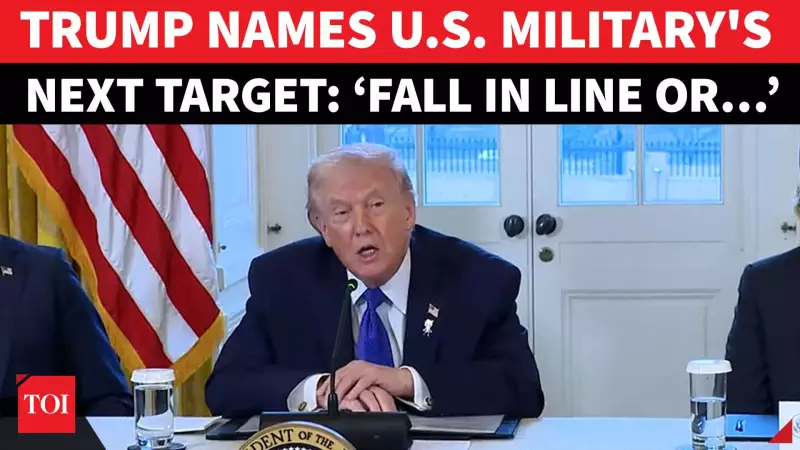
In a significant escalation of geopolitical tensions in the Americas, former and potentially future US President Donald Trump has delivered a severe ultimatum to the Cuban government. He declared an immediate halt to all oil and financial supplies to the island nation, pushing Havana into a corner with a demand for a swift deal.
The Stark Ultimatum: Zero Oil, Zero Money
On January 11, 2026, via his preferred social media platform Truth Social, President Trump made a definitive announcement. He stated there would be "zero" oil or monetary assistance flowing from the United States to Cuba. This move directly targets Cuba's long-standing economic lifeline, which for decades has been sustained by subsidised oil and financial aid from Venezuela, a key ally.
Trump's message was clear: Cuba must strike an agreement with the United States before it becomes "too late." The nature of the demanded deal was not explicitly detailed, but the consequences of non-compliance were heavily implied through heightened rhetoric.

Rhetorical Posturing and Military Undertones
Adding a layer of provocative political theatre, Trump reshared another social media post. This post humorously suggested that current US Secretary of State Marco Rubio could one day become the "President of Cuba," to which Trump added, "sounds good to me." While analysts and observers widely interpret this as rhetorical muscle-flexing rather than concrete policy, it unmistakably signals the increasing pressure Washington intends to apply on the Communist-led island.
The underlying threat of military action forms the backdrop of this economic stranglehold. The ultimatum presents Cuba with what appears to be two stark choices: negotiate on US terms or face potentially more severe consequences, including the possibility of a US military intervention. This "or else" scenario has sent ripples through diplomatic circles, recalling decades of fraught history between the two nations.
Broader Implications and Regional Fallout
This aggressive stance by the Trump administration represents a dramatic hardening of US policy towards Cuba, potentially reversing any tentative steps towards normalisation taken in previous years. The direct reference to cutting off Venezuelan support also indicates a continued US strategy of maximum pressure on the socialist governments in Latin America.
The move places the Cuban government in an extremely precarious position. Its economy, already fragile, is heavily dependent on external energy imports. A complete severance of this supply could lead to severe internal crises, from electricity blackouts to transportation halts, potentially destabilising the nation.
For the international community, and particularly for India which has historically maintained cordial relations with both nations, this development poses a challenge. It forces a recalibration of diplomatic positions in a hemisphere where US influence remains paramount. The coming days will be critical to see if Havana seeks dialogue or chooses to brace for further confrontation.