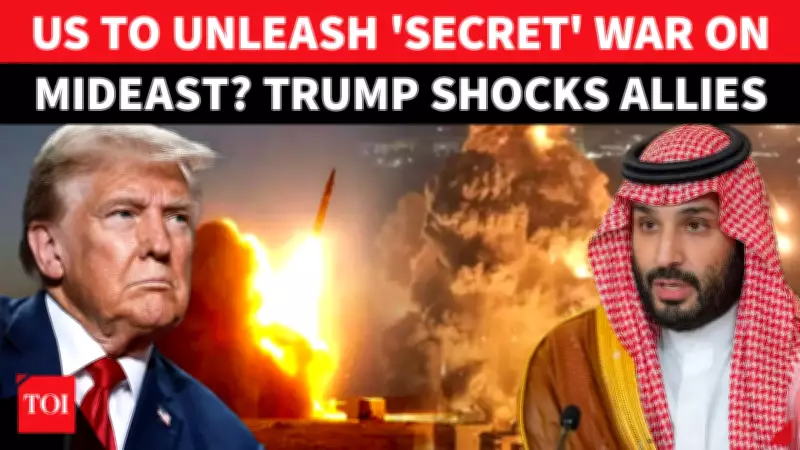
Trump Proposes Radical Shift In US Military Strategy For Middle East
In a startling address that has captured global attention, US President Donald Trump has outlined a potential overhaul of American military operations in the Middle East. Speaking at the National Prayer Breakfast in Washington DC, the President hinted at a future where the United States might conduct strikes without prior notification to its regional allies.
"They'd Have No Idea": Trump's Vision For Covert Operations
President Trump criticized established protocols that involve alerting allied governments before military actions, arguing that such warnings have historically allowed ISIS fighters to escape capture or elimination. He described a new approach where US forces would leverage advanced technology and secrecy to launch unexpected attacks.
"We would simply go at it," Trump stated, emphasizing the core principles of this proposed strategy: unprecedented speed, absolute secrecy, and overwhelming force. The President specifically mentioned the utilization of "portable airports" and cutting-edge stealth capabilities to execute operations from remote desert locations, making detection nearly impossible.

The Strategic Rationale Behind The Surprise Attack Doctrine
This potential policy shift represents a significant departure from decades of US military diplomacy in the region. The traditional practice of coordinating with allies, while fostering international cooperation, is now being questioned for its operational security drawbacks. Trump's comments suggest a belief that tactical surprise could deliver more decisive results against terrorist networks and hostile state actors.
The implications are profound for nations across the Middle East that have long-standing security partnerships with Washington. A move toward unannounced strikes would fundamentally alter the trust dynamics and operational transparency that underpin these alliances.
Global Reactions And Regional Security Calculations
While the President's remarks were delivered in a domestic setting, their reverberations are being felt in capitals worldwide. Military analysts are now assessing how such a strategy would impact:
- Counter-terrorism effectiveness against groups like ISIS
- Diplomatic relations with key Middle Eastern partners
- Regional stability and escalation risks
- International law and sovereignty considerations
The proposal comes amid ongoing tensions in the Middle East and reflects the Trump administration's continued emphasis on unpredictable, results-oriented foreign policy. As discussions continue, the global community watches closely to see whether these conceptual remarks will translate into actual changes in US military engagement in one of the world's most volatile regions.