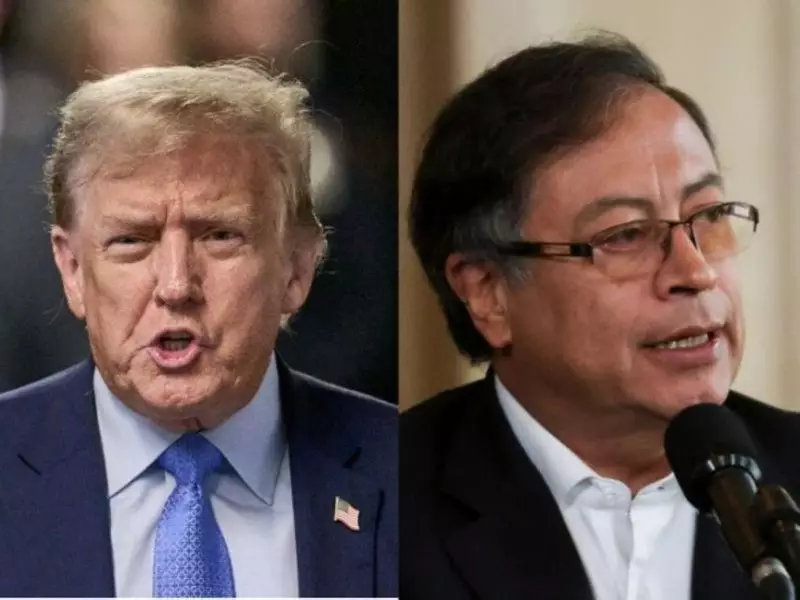
In a surprising diplomatic turn, former United States President Donald Trump has extended an invitation to Colombia's leftist President Gustavo Petro for a meeting. This move comes just days after Trump sparked international concern by suggesting he would consider military action against Colombian drug laboratories if he returned to the White House.
From Threats to an Invitation
The sequence of events began when Trump, during a campaign rally, made a stark declaration about tackling drug cartels. He stated he would warn the Colombian government about potential US military strikes on drug production facilities if he was re-elected. This comment was immediately met with a firm and public rebuke from President Petro.
Petro took to social media platform X, formerly Twitter, to respond. He drew a historical parallel, reminding Trump that Latin America has resisted foreign military intervention for two centuries. The Colombian leader asserted that such actions would constitute a blatant violation of national sovereignty and would be considered an act of war, making any collaboration between the two nations impossible.

A Sudden Change in Tone
Following this public exchange, the tone shifted dramatically. According to President Petro, he received a direct phone call from Donald Trump. Petro described appreciating the "call and the tone" of their conversation. He revealed that the discussion was notably different from the aggressive rhetoric of the campaign trail.
"I appreciated his call and his tone," Petro stated, highlighting the contrast. The call culminated in Trump formally inviting the Colombian president to meet at the Mar-a-Lago estate in Florida. Petro confirmed he has accepted the invitation, framing it as a necessary step for dialogue between North and South America.
Implications for Bilateral Relations
This rapid development from public threats to a planned private meeting has significant implications. Analysts suggest it reflects Trump's unconventional diplomatic style, where confrontational public statements are sometimes followed by direct, personal outreach. For Colombia, a key US ally in the region, managing this relationship is crucial.
The proposed meeting agenda, while not fully detailed, is expected to cover critical bilateral issues like the fight against drug trafficking, trade, and regional security. Petro emphasized that the dialogue is essential, stating, "I think it is good to speak, and I appreciate the invitation."
This episode underscores the volatile nature of international relations in an election year. A potential second Trump presidency could see a major shift in Washington's approach to Latin America, moving from partnership to a more unilateral and coercive strategy on issues like narcotics. The upcoming meeting at Mar-a-Lago will be closely watched as an early indicator of that potential future dynamic.