

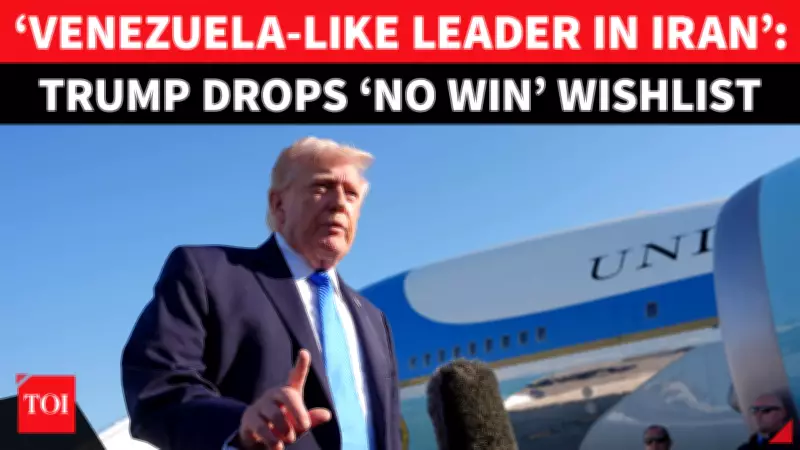
Trump Unveils Landmark Iran Agreement, Issues Stark Regime Change Warning
In a dramatic development that could reshape Middle Eastern geopolitics, former US President Donald Trump has announced a significant diplomatic breakthrough with Iran. Speaking to CNN's Kaitlan Collins, Trump revealed that the United States and Iran have negotiated a comprehensive 15-point agreement, marking one of the most consequential announcements since tensions escalated into open conflict.
Key Points of the Historic Agreement
The agreement reportedly includes two major concessions from Iran:
- Nuclear Weapons Ban: Iran has committed to completely abandoning any pursuit of nuclear weapons, addressing one of the West's primary security concerns for decades.
- Strait of Hormuz Reopening: Iran has agreed to reopen the strategically vital Strait of Hormuz, a critical global oil shipping route that has been at the center of regional tensions.
Behind the Scenes of the Negotiations
The talks were conducted by Trump's envoys Steve Witkoff and Jared Kushner, who engaged with what Trump described as a "respected" Iranian leader. Notably, this interlocutor was not Supreme Leader Mojtaba Khamenei, suggesting potential divisions within Iran's power structure. Multiple reports indicate the Iranian negotiator was likely Parliament Speaker Mohammad Bagher Ghalibaf, signaling possible political realignments within Tehran.

Trump's Stark Warning: Venezuela-Style Regime Change
While announcing the diplomatic progress, Trump issued a chilling warning to Iran's current leadership. He stated that Iran could face "a very serious form of regime change" similar to what occurred in Venezuela, where the United States recognized opposition leader Juan Guaidó as interim president in 2019. This suggests that despite the negotiated agreement, the US maintains regime change as a viable policy option should Iran fail to comply with terms or if political conditions shift.
Regional Context and Implications
The announcement comes amid escalating regional violence, including Hezbollah rocket attacks on northern Israel and Iranian-backed militia operations against US and Israeli targets. The reopening of the Strait of Hormuz could significantly ease global energy market tensions, while Iran's nuclear commitment—if verified and implemented—would represent a major non-proliferation victory. However, Trump's regime change warning introduces substantial uncertainty about the long-term stability of any agreement.
This development represents a complex mix of diplomatic progress and continued confrontation, with the potential to either de-escalate the Iran conflict or set the stage for further political upheaval in Tehran. The international community will be closely monitoring implementation of the agreement's terms and Iran's internal political dynamics in the coming weeks.






