

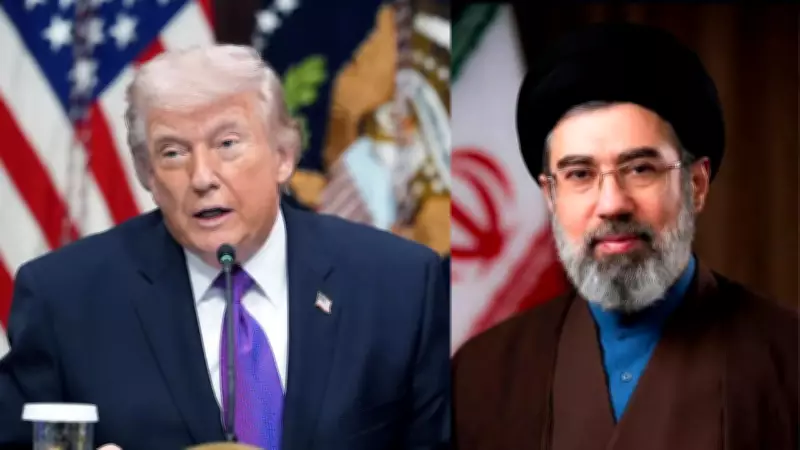
Trump Accuses Iran of Deploying 1,200 Missiles Across Middle East
In a recent television interview, former United States President Donald Trump made startling allegations regarding Iran's military posture in the Middle East. Trump claimed that Tehran had positioned approximately 1,200 missiles targeting several countries across the region, as geopolitical tensions continue to escalate.
Specific Allegations and Regional Context
Speaking during an appearance on Fox's The Brian Kilmeade Show, Trump asserted that Iran had been actively preparing for military domination of the Middle East. "Iran had thousands of missiles pointed at all these Middle Eastern countries for the last four months," the former president stated emphatically.
Trump specifically named the United Arab Emirates, Qatar, Oman, and Saudi Arabia as nations targeted by these alleged missile deployments. "They were going to take over the Middle East, they were going to control it all," he added, suggesting Iran had "1,200 missiles pointed at these countries."

Escalating Tensions Following Leadership Changes
These remarks came shortly after Iran's newly appointed supreme leader, Mojtaba Khamenei, issued a defiant statement on Thursday. Khamenei signaled that Iran would not retreat from ongoing conflicts with both the United States and Israel.
"We will not refrain from avenging the blood of your martyrs," Khamenei declared in a message addressed to the Iranian nation. This statement followed reports that Khamenei had been injured and possibly left in a coma after US-Israeli strikes on a compound in Tehran on February 28, which resulted in the death of his father.
Trump's Assessment of Khamenei's Condition
Addressing widespread speculation about the Iranian leader's health status, Trump offered his own assessment during the interview scheduled to air Friday morning. "I think he probably is. I think he is damaged, but I think he's probably alive in some form, you know," Trump told host Brian Kilmeade.
The former president's comments reflect the growing uncertainty surrounding Iran's leadership following the recent military strikes and the subsequent transition of power within the country's political hierarchy.
Maritime Security and Strategic Waterways
Trump also addressed concerns about maritime security in the volatile region, particularly regarding the Strait of Hormuz. This critical global shipping channel handles approximately one-fifth of the world's petroleum consumption and represents a strategic chokepoint for international trade.
"Go through the strait of Hormuz and show some guts," Trump advised commercial vessels. "There's nothing to be afraid of. They have no Navy and we sunk all their ships."
Broader Regional Implications
These developments occur against a backdrop of heightened military activity across the Middle East. Recent incidents include Saudi Arabia intercepting a drone headed toward the Shaybah oil field and Israeli strikes targeting ten Hezbollah positions in Beirut.
Additionally, the United States has temporarily authorized the sale of some Russian oil following Iranian threats to "set the region's oil and gas on fire," highlighting the complex economic dimensions of the ongoing crisis.
The situation remains fluid as regional powers navigate these escalating tensions, with potential implications for global energy markets, international shipping routes, and broader geopolitical stability in one of the world's most strategically important regions.






