

In a significant escalation of tensions, United States President Donald Trump has asserted that leaders from Iran reached out to him seeking negotiations. This development comes against the backdrop of widespread anti-government protests in Iran and threats of American military action.
Trump's Claims of Iranian Outreach and Military Posture
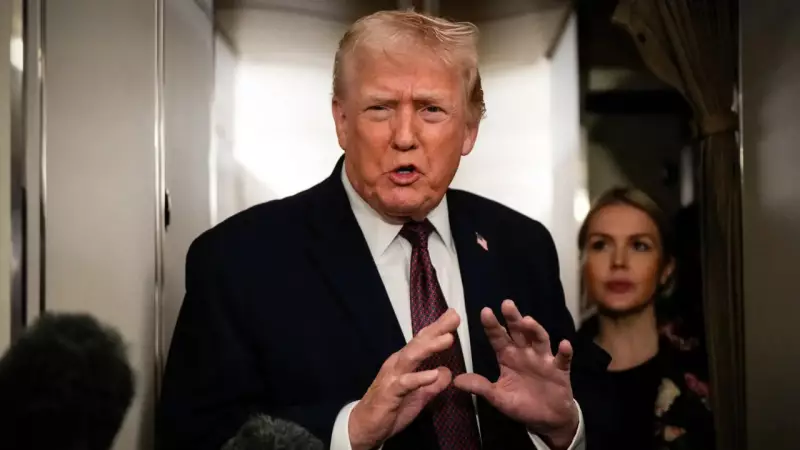
Speaking to journalists while on board Air Force One on Sunday, President Trump made the surprising revelation. He stated that Iranian leadership had called the previous day, expressing a desire to negotiate. "I think they are tired of being beat up by the United States," Trump remarked. However, he immediately coupled this with a warning, adding that a meeting might be arranged but the US "may have to act because of what’s happening before the meeting."
The President confirmed that the US military is "very seriously" evaluating potential action against Iran. This consideration is a direct response to the Iranian regime's violent crackdown on civilians participating in mass demonstrations. When questioned if Iran had crossed his previously stated "red line" of protesters being killed, Trump responded, "They’re starting to, it looks like." He emphasized that strong options are being reviewed and a determination will be made.

Options on the Table and Iran's Stark Warning
According to reports from US officials cited by The New York Times, President Trump has been presented with a range of possible strike options. These include potential attacks on non-military sites within Tehran, Iran's capital. Senior officials indicated that some proposals are specifically tied to elements of Iran's security apparatus responsible for using violence to suppress the protests.
This military deliberation unfolds as more than 500 civilians are feared dead in the nationwide protests, which have been fueled by a severe and deepening economic crisis within the Islamic Republic.
In a defiant response, Iran issued a severe warning on the same day. Mohammad Baqer Qalibaf, the speaker of Iran's parliament, declared that US military bases in the region and Israel would be considered "legitimate targets" if Washington launches an attack. The threat was delivered amidst chaotic scenes in parliament, with lawmakers chanting "Death to America!" Qalibaf also vowed a harsh domestic response to the unrest, stating the government would deal with protesters "in the most severe way."
A Precarious Standoff with Global Implications
The situation presents a highly volatile standoff. On one side, the US administration is publicly weighing military strikes in response to human rights abuses, while claiming Iranian leaders are seeking dialogue. On the other, Iran is threatening retaliatory strikes across the Middle East if attacked. The claims of a diplomatic opening by Trump remain unverified by Iranian state media, which typically portrays the US as an unwavering adversary.
The core trigger remains the internal crisis in Iran. The protests, stemming from economic grievances, have met with a brutal security response, drawing international condemnation and now potentially triggering a wider conflict. The coming days will be critical in determining whether the path leads to de-escalation and talks, or a dangerous new military confrontation in the region.






