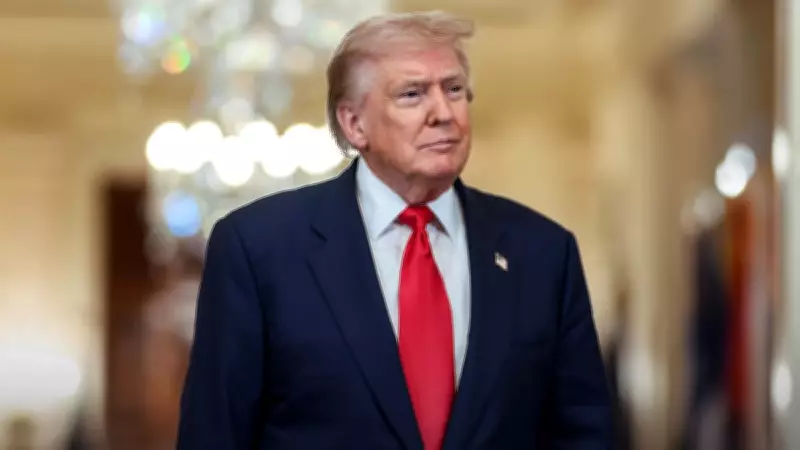
Donald Trump Weighs NATO Withdrawal, Dismisses Alliance as Ineffective
In a significant development that could reshape global geopolitics, former US President Donald Trump is actively contemplating a withdrawal of the United States from the North Atlantic Treaty Organization (NATO). Sources close to the matter reveal that Trump has privately expressed deep dissatisfaction with the alliance, going so far as to label it a 'paper tiger'—a term implying that NATO lacks real power or effectiveness despite its formidable appearance.
Trump's Critique of NATO's Role and Function
Trump's criticism centers on his long-standing belief that NATO member countries are not contributing their fair share to defense spending, leaving the US to bear a disproportionate burden. He argues that this imbalance undermines the alliance's credibility and operational capacity. According to insiders, Trump has been vocal in private meetings, asserting that NATO has failed to adapt to modern security challenges and is overly reliant on American military might without offering commensurate support.
This stance echoes Trump's public comments during his presidency, where he frequently pressured allies to increase defense budgets, threatening to reduce US involvement if they did not comply. His current considerations suggest a more drastic approach, potentially involving a complete exit from the treaty, which has been a cornerstone of transatlantic security since its inception in 1949.

Potential Implications for International Security
If Trump were to follow through on this threat, it could have profound consequences for global stability. NATO, comprising 32 member states, has been instrumental in deterring aggression, particularly from Russia, and coordinating responses to crises. A US withdrawal would likely weaken the alliance's military capabilities and political cohesion, potentially emboldening adversaries and creating power vacuums in regions like Eastern Europe.
Experts warn that such a move could destabilize international relations, leading to increased tensions and a reevaluation of security partnerships worldwide. It might also impact US credibility, as allies question its commitment to collective defense agreements. The timing is particularly sensitive, given ongoing conflicts and geopolitical rivalries that rely on NATO's framework for resolution.
Political and Diplomatic Reactions
Reactions from political circles have been mixed, with some of Trump's supporters applauding his America-first approach, while critics condemn it as reckless isolationism. Diplomatic sources indicate that European leaders are closely monitoring the situation, concerned about the potential fallout. Many are urging the US to reaffirm its NATO commitments, emphasizing the alliance's role in promoting peace and countering threats like terrorism and cyberattacks.
In the US, the debate has reignited discussions about foreign policy priorities, with proponents of multilateralism arguing that NATO remains vital for shared security. As Trump's considerations gain attention, analysts predict that this issue could become a focal point in upcoming political campaigns, influencing voter perceptions on international engagement.
Looking Ahead: What This Means for the Future
The prospect of a US exit from NATO underscores broader trends in global politics, including rising nationalism and skepticism toward international institutions. While Trump's plans are still in the deliberation phase, they highlight the fragility of long-standing alliances in an era of shifting power dynamics. Observers note that any decision to withdraw would require navigating complex legal and procedural hurdles, but the mere discussion signals a potential pivot in US strategy.
As the world watches, the outcome could redefine America's role on the global stage, with lasting effects on diplomacy, defense, and economic cooperation. For now, Trump's characterization of NATO as a 'paper tiger' serves as a stark reminder of the challenges facing collective security in the 21st century.