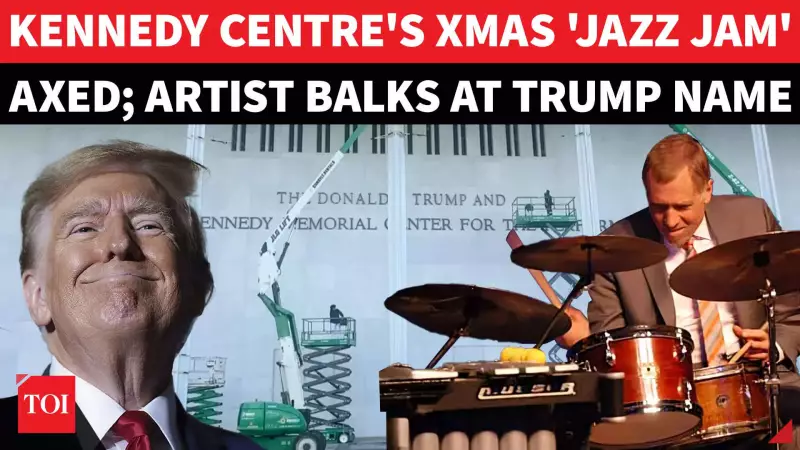
A cherished holiday tradition in Washington DC has been unexpectedly halted, leading to a significant cultural and political controversy. The reason is a recent and highly contentious change to the name of one of America's most iconic performing arts venues.
Name Change Triggers Immediate Backlash
For over twenty years, a special jazz concert has been a staple of the holiday season at the John F. Kennedy Memorial Center for the Performing Arts. However, this year's Christmas Eve performance was abruptly canceled. The cancellation was not due to logistical issues or poor weather, but as a direct act of protest by the scheduled jazz artist.
The artist decided to withdraw after the venue's façade was officially updated last Friday, December 25, 2025. The building now bears the new name: The Donald J. Trump and The John F. Kennedy Memorial Center for the Performing Arts. This decision, approved by the president's handpicked board, followed months of public speculation fueled by Donald Trump himself floating the idea.

The White House Stance and Public Reaction
The White House has confirmed that the move was formally sanctioned by the centre's governing board, which is appointed by the president. This formalizes what was once a publicly discussed concept into a concrete reality, permanently altering the identity of the landmark institution named for the 35th president, John F. Kennedy.
The reaction from the artistic community and the public has been swift and fierce. The jazz musician's decision to cancel the long-running concert is seen as a powerful statement against the politicization of a cultural space. It highlights a deep-seated tension between current political administrations and established artistic institutions.
Broader Implications and Cultural Divide
This incident transcends a single canceled event. It raises critical questions about legacy, political influence in the arts, and the preservation of cultural heritage. The Kennedy Centre has long stood as a symbol of American artistic achievement, and its renaming has touched a nerve, suggesting a reshaping of national cultural symbols.
The controversy also arrives amidst a charged global political climate, as referenced in other recent headlines concerning international tensions, from Venezuela to Ukraine. The renaming debate adds a domestic cultural layer to the ongoing political discourse, illustrating how domestic policies can directly impact cultural expressions and traditions.
As the debate continues, the empty stage on Christmas Eve serves as a potent symbol of the clash between political legacy and artistic independence. The long-term effects of this name change on the centre's programming and its relationship with artists worldwide remain to be seen.