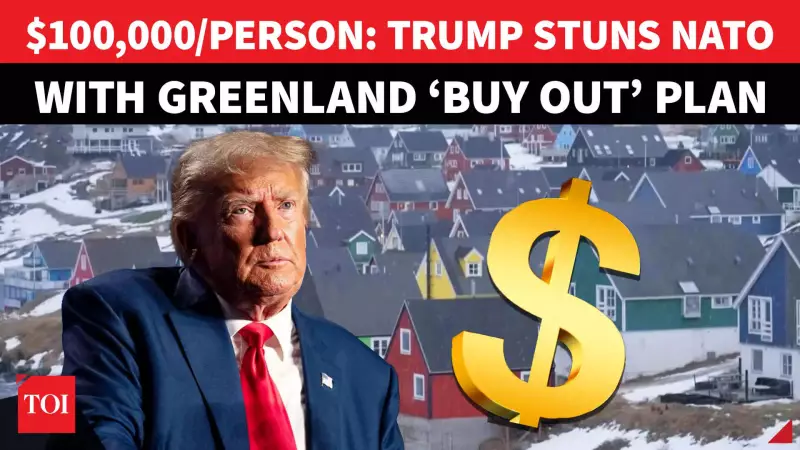
In a stunning geopolitical move that has sent shockwaves through the North Atlantic Treaty Organization (NATO), the administration of former US President Donald Trump is reportedly considering a direct financial proposition to the people of Greenland. According to a Reuters report dated January 9, 2026, the plan involves offering substantial cash payments to Greenlanders in an audacious bid to pull the strategically crucial Arctic island closer to Washington's sphere of influence.
The $6 Billion Proposal: Cash for Allegiance?
The internal discussions within the Trump administration, as revealed by sources, are nothing short of extraordinary. Officials are weighing a scheme to offer payments of up to $100,000 per person to Greenland's approximately 56,000 inhabitants. This ambitious plan could carry a total price tag of nearly $6 billion (or $60,00,00,000 as per Indian numbering system). The core objective is clear: to incentivise Greenland to break its longstanding constitutional ties with the Kingdom of Denmark and align itself directly with the United States.
Driving this controversial idea are multifaceted concerns centred on national security, untapped mineral wealth, and broader Arctic strategy. The Arctic region has become a new frontier for global power competition, with melting ice opening new shipping routes and access to vast natural resources. Controlling Greenland would give the US a dominant position in this high-stakes arena.

International Backlash and Firm Rejection
The reported proposal has triggered immediate and fierce reactions from America's traditional allies. Denmark, which has held sovereignty over Greenland for centuries, has reacted with palpable anger, viewing the move as a blatant affront to its sovereignty and a destabilising act within the Western alliance. Other European partners in NATO have also expressed deep concern and disapproval, seeing it as a unilateral action that undermines alliance cohesion.
Perhaps the most significant rebuttal has come from within Greenland itself. The island's Prime Minister has outright rejected any talk of annexation or a shift away from Denmark. This firm stance from Nuuk, Greenland's capital, highlights the complexity of the situation and the agency of the Greenlandic people, whose consent would be paramount for any such seismic political shift.
Geopolitical Ramifications and a Divided NATO
The mere discussion of this $6 billion offer has exposed significant fissures within the transatlantic partnership. The scenario paints a picture of a potential future where US foreign policy under a returning Trump presidency could prioritise transactional deals over traditional diplomatic alliances. The move is seen as a direct challenge to the existing territorial and political order in the Arctic, a region where cooperation, not confrontation, has been the recent norm among Arctic states.
This development is not happening in a vacuum. It follows a pattern of provocative statements and actions that have kept global audiences on edge. The news report referenced alongside this story includes sensational headlines about potential confrontations in Venezuela, violence in Honduras and Portland, and even a stark warning that NATO troops are 'ready for war' if Trump orders a Greenland invasion. While these may vary in credibility, they collectively contribute to an atmosphere of heightened geopolitical tension and uncertainty that now surrounds the future of the Arctic and the stability of NATO itself.
The coming days will reveal whether this $100,000-per-person idea remains a theoretical discussion or evolves into a formal proposal. Regardless, it has already succeeded in refocusing the world's attention on the strategic importance of Greenland and the fragile dynamics of international relations in an increasingly polarised world.